Introducing Non‑Invasive Laser & IPL Solutions
Intense Pulsed Light (IPL) and non‑ablative laser platforms such as fractional CO₂, Er:YAG, and Nd:YAG deliver or targeted wavelengths that heat the dermis without vaporizing the epidermis. This selective photothermolysis breaks down melanin, hemoglobin and stimulates collagen remodeling, resulting in smoother tone, reduced redness, and tighter texture. Because the outer skin layer remains intact, downtime is minimal—most patients resume normal activities within hours and experience only brief redness or swelling. Timeless Med Spa in New Jersey combines FDA‑cleared IPL devices with fractional laser protocols, tailoring fluence and pulse duration to each client’s Fitzpatrick skin type and concerns. The clinic’s board‑certified team emphasizes personalized treatment plans, rigorous pre‑ and post‑care, and natural‑looking results that enhance confidence without surgery. Clients notice complexion and firmer skin after sessions, reinforcing value of non‑invasive care.
IPL Safety, Dermatologist Perspective, and Common Concerns
Quick‑Reference Table
| Category | Details |
|---|---|
| Typical side effects | Transient redness, rubber‑band snap sensation, slight swelling, temporary hyper‑pigmentation (resolves in days) |
| Contraindications | Pregnancy, recent sunburn, photosensitizing meds (e.g., isotretinoin), active skin infections, darker Fitzpatrick tones (higher pigment‑change risk) |
| Dermatologist view | Safe when performed on appropriate Fitzpatrick skin types, calibrated fluences, and by trained clinicians; rare serious long‑term risks |
| Comparison to lasers for PCOS hair | Diode, Alexandrite, Nd:YAG lasers > IPL for durable hair reduction (deeper melanin targeting) |
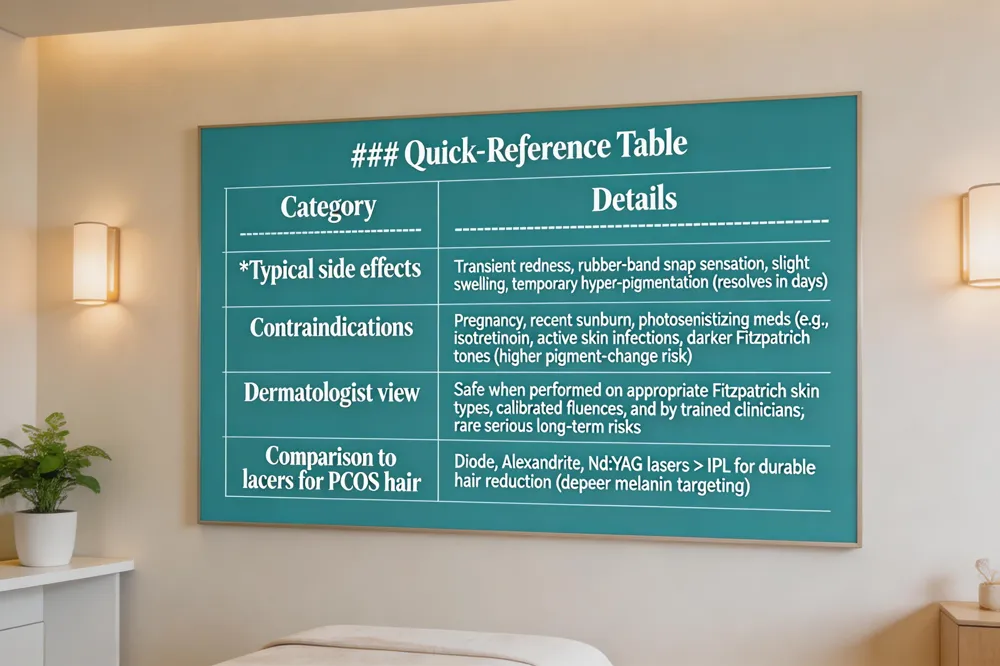 Intense Pulsed Light (IPL) works by delivering a broad spectrum of flash‑lamp pulses that are absorbed by chromophores—melanin in pigment spots and hemoglobin in blood vessels. This selective photothermolysis converts light to heat, breaking down unwanted cells while sparing surrounding tissue. Dermatologists widely approve IPL when it is performed on appropriate Fitzpatrick skin types, uses calibrated fluences, and is administered by trained clinicians. They view IPL as a safe, non‑invasive option for treating sun‑damage, rosacea, and mild hair reduction, noting that serious long‑term risks are rare.
Typical side effects are mild and short‑lived: transient redness, a rubber‑band‑snap sensation, slight swelling, or temporary hyper‑pigmentation that usually resolve within a few days with proper after‑care. Contraindications include pregnancy, recent sunburn, photosensitizing medications (e.g., isotretinoin), active skin infections, and darker skin tones that increase pigment‑change risk.
For PCOS‑related excess hair, laser devices (diode, Alexandrite, or Nd:YAG) are generally more effective than IPL because they target deeper, melanin‑rich follicles with higher precision. IPL can still aid skin texture, but laser remains the preferred modality for durable hair reduction.
Collagen‑Boosting Therapies: Microneedling, Lasers, and Ultrasound
Collagen‑Boosting Modalities
| Modality | Mechanism | Typical Downtime | Ideal Indications |
|---|---|---|---|
| Microneedling + PRP/PRF | Micro‑injuries + growth‑factor boost → fibroblast activation | Minimal (1‑2 days) | Facial texture, fine lines, overall firmness |
| Fractional CO₂ laser (ablative) | Microscopic ablative columns → robust wound‑healing | 5‑7 days (redness, crust) | Deep wrinkles, severe scarring, pronounced texture loss |
| Non‑ablative Nd:YAG laser | Dermal heating without epidermal vaporization | 1‑2 days (mild erythema) | Mild‑moderate rejuvenation, patients needing limited downtime |
| Ultherapy (focused ) | Deep dermal heating → collagen synthesis, tissue tightening | No downtime | Lifting of neck, jawline, brow; adjunct to other therapies |
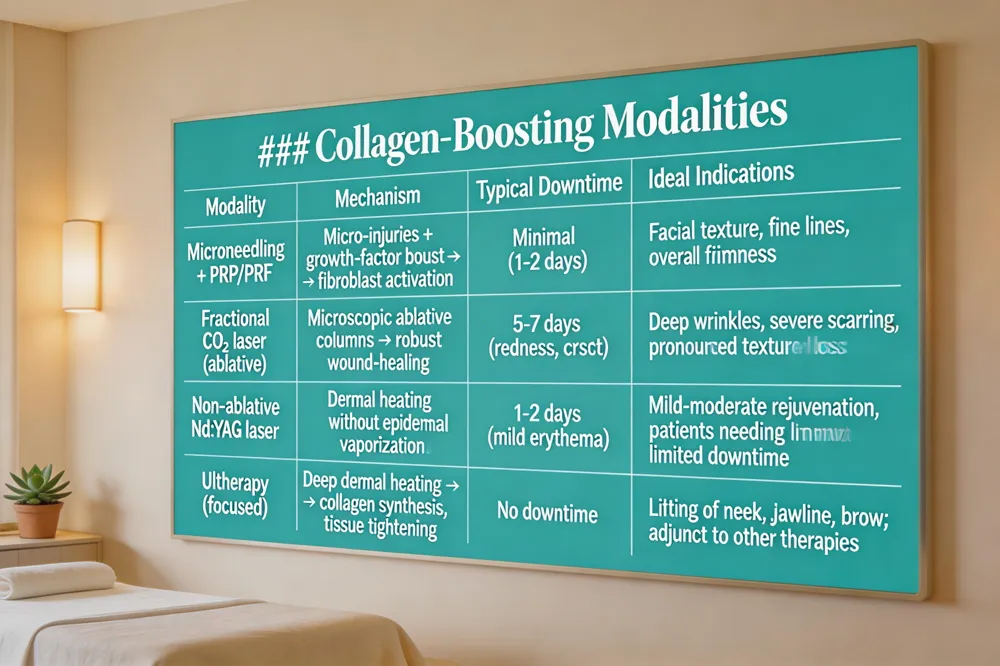 Microneedling combined with PRP (or PRF) is often the best collagen treatment for the face. The micro‑injuries trigger a natural healing cascade, while the injected growth factors amplify fibroblast activity, delivering smoother, firmer skin with minimal downtime. For patients who want even deeper remodeling, a fractional CO₂ laser is the most effective laser for collagen production; its microscopic ablative columns provoke a robust wound‑healing response that remodels dermal collagen over weeks. When downtime must be limited, a non‑ablative Nd:YAG laser offers comparable collagen stimulation by heating the deeper dermis without vaporizing the epidermis. Both technologies can be personalized and safely used on a range of skin types. Laser collagen treatment, whether fractional CO₂, Er:YAG, or IPL, works by creating controlled thermal injury that encourages new collagen and elastin formation, improving fine lines, texture, and pigmentation. Ultherapy adds another dimension—focused ultrasound lifts and tightens tissue by heating the deep dermis, stimulating collagen without any surface damage. At Timeless Med Spa, we often blend microneedling‑PRP, fractional laser, and Ultherapy in a customized protocol to achieve natural, long‑lasting rejuvenation.
Choosing the Right Laser for Skin Rejuvenation
Laser Selection Cheat‑Sheet
| Laser Type | Ablative? | Key Benefits | Typical Downtime | Best Skin Types |
|---|---|---|---|---|
| Fractional CO₂ | Yes | Deepest collagen remodeling, dramatic texture improvement | 5‑7 days | Fitzpatrick I‑III (lighter) |
| Fractional Er:YAG | Yes (lighter) | Similar resurfacing with less thermal damage | 3‑5 days | Fitzpatrick I‑IV (incl. medium) |
| Hybrid HALO™ | Yes + Non‑ablative | Combines ablative precision with smoother recovery | 2‑4 days | Fitzpatrick I‑IV |
| Non‑ablative Nd:YAG | No | Moderate improvement, minimal downtime | <1 day (redness) | Fitzpatrick I‑VI (all) |
| Diode/Long‑pulse IPL | No | Pigment/vascular targeting, mild collagen boost | <1 day | Fitzpatrick I‑III (lighter) |
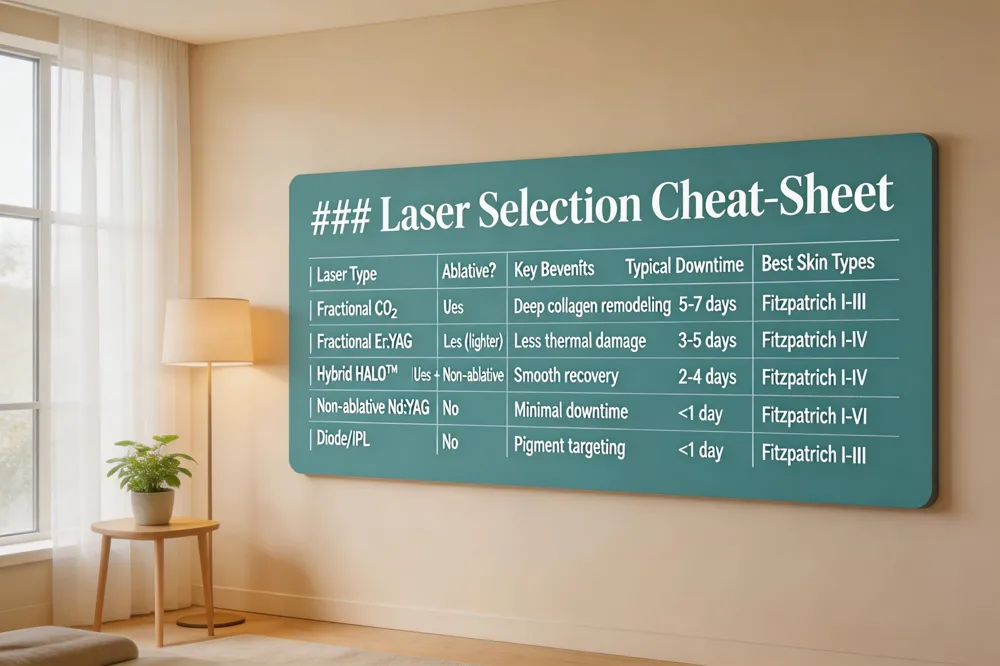 Ablative vs non‑ablative lasers:
Ablative systems (CO₂, Er:YAG) vaporize the epidermis, delivering dramatic collagen remodeling but require longer downtime. Non‑ablative lasers heat the dermis while sparing the surface, offering milder results with minimal recovery.
Fractional CO₂ and Er:YAG technologies:
Fractional CO₂ creates microscopic ablative columns that dramatically improve fine lines, deep wrinkles, and scarring. Er:YAG provides comparable resurfacing with less thermal damage, making it safer for medium‑to‑dark skin tones and reducing pigment‑change risk.
Laser options for facial concerns:
For most facial rejuvenation, the fractional CO₂ laser is the top choice, delivering robust texture and pore improvements. Patients with lighter skin who tolerate downtime may opt for a fully ablative CO₂ treatment. Those seeking gentler yet effective results benefit from fractional Er:YAG or hybrid platforms like HALO™ that blend ablative and non‑ablative wavelengths.
Personalized treatment planning:
The "best" laser depends on skin type, concern severity, and recovery tolerance. A thorough consultation tailors device selection—whether fractional CO₂, Er:YAG, or non‑ablative options—to each client’s unique goals, ensuring natural‑looking, lasting results.
Q: What is the best laser for skin rejuvenation?
A: Fractional CO₂ laser (ablative) offers the deepest collagen remodeling; Er:YAG is a gentler alternative; non‑ablative fractional lasers provide moderate improvement with minimal downtime.
Q: Best laser skin rejuvenation for face?
A: Fractional CO₂ is generally regarded as the top facial choice; Er:YAG or hybrid systems suit lighter or darker skin tones respectively.
Q: Which laser treatment is best for skin rejuvenation?
A: Ablative CO₂ fractional laser is the gold standard for dramatic results; non‑ablative Er:YAG or ProFractional™ are gentler options.
Q: Types of laser treatments for face?
A: Ablative (CO₂, Er:YAG), non‑ablative (Nd:YAG, diode), fractional (ablative and non‑ablative), and IPL for pigment/vascular concerns.
IPL Applications, Patient Experiences, and Longevity
IPL Treatment Overview
| Treated Concern | Typical Sessions (4‑wk interval) | Expected Onset of Results | Duration of Benefit |
|---|---|---|---|
| Age spots & sun‑damage | 3‑6 | 3‑6 months (gradual fading) | 6‑12 months; annual touch‑ups extend to 2‑3 years |
| Rosacea redness | 3‑5 | 2‑4 months | 9‑12 months with sun protection |
| Broken capillaries | 3‑4 | 2‑3 months | 12‑18 months |
| Mild acne scarring | 4‑6 | 4‑6 months | 6‑12 months |
| Overall skin tone/texture | 4‑6 | 3‑6 months | 6‑12 months |
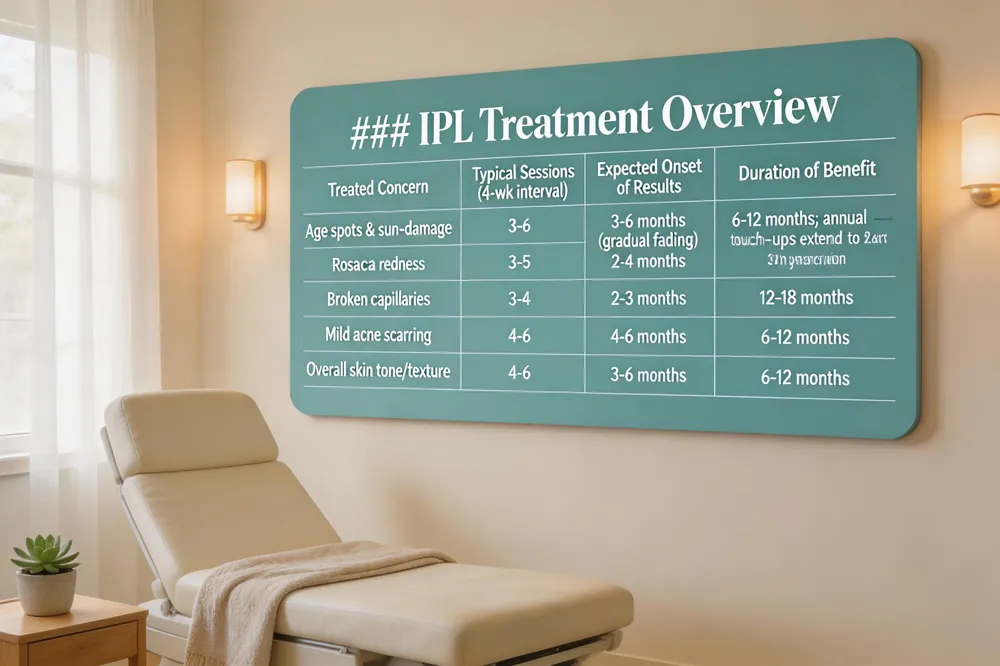 Intense Pulsed Light (IPL) targets a broad array of skin concerns in a single, non‑invasive session. By delivering broad‑spectrum pulses that are absorbed by melanin and hemoglobin, IPL reduces age spots, sun‑induced hyperpigmentation, rosacea redness, broken capillaries, and even mild acne scarring while stimulating collagen for smoother, brighter skin.
Patient reviews and outcomes – Clients of Timeless Med Spa consistently report visible improvements in texture and tone with little to no downtime. The clinic’s 4.9‑star rating reflects personalized care, skilled staff, and natural‑looking results, though a few patients note slower progress and seek alternative options.
Session frequency and maintenance – Most skin concerns respond best after 3‑6 sessions spaced four weeks apart, with optimal results emerging at 3‑6 months. With diligent sun protection and a steady skincare routine, benefits can last 6‑12 months; annual maintenance visits extend the glow up to 2‑3 years.
Local clinic accessibility – Timeless Med Spa in Berlin, New Jersey (123 Main Street, Berlin, NJ; (201) 555‑1234) offers convenient, board‑certified IPL treatments, flexible payment plans, and package discounts, making professional photorejuvenation easy for nearby residents. Schedule a free consultation online to begin your personalized skin‑enhancement plan.
Cost, Sessions, and Visible Results
Cost & Timeline Snapshot
| Procedure | Typical # of Sessions | Approx. Cost per Session (USD) | Total Expected Cost | Visible Changes Timeline |
|---|---|---|---|---|
| Non‑ablative IPL | 3‑5 | $150‑$300 | $450‑$1,500 | Redness ↓ 1‑2 days; collagen boost ↑ 4‑12 weeks |
| Fractional CO₂ laser (single) | 1 (plus 1‑3 follow‑ups) | $1,200‑$2,500 | $1,500‑$3,000 | Dramatic improvement visible 2‑4 weeks, peaks at 3‑6 months |
| Microneedling + PRP | 3‑4 | $300‑$500 | $900‑$2,000 | Texture smoother 2‑3 weeks; collagen gains 8‑12 weeks |
| Ultherapy | 1‑2 | $800‑$1,200 | $800‑$2,400 | Lift & tightening 1‑2 months, continues up to 6 months |
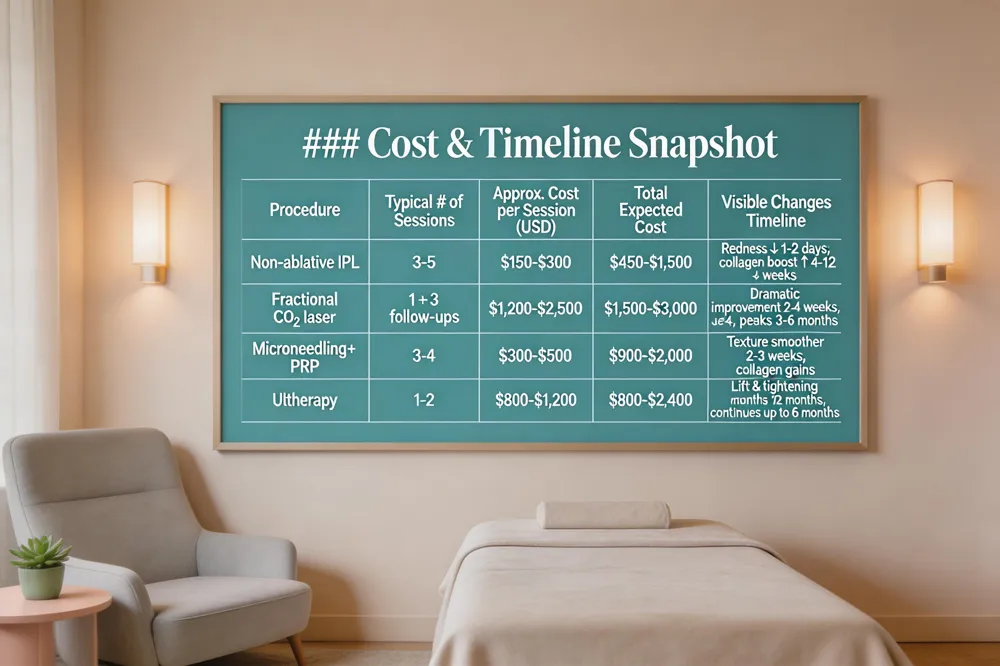 Patients usually need multiple visits to achieve optimal skin rejuvenation. Non‑ablative and IPL protocols often require 3‑5 sessions spaced 4‑6 weeks apart, while ablative resurfacing may need a single, more intensive treatment followed by a few follow‑up appointments for fine‑tuning. The cumulative effect appears gradually: redness subsides within a few hours to days, collagen remodeling continues for 6‑12 weeks, and the skin’s tone and texture improve with each session.
Before‑and‑after images consistently show a reduction in fine lines, smoother texture, and a brighter complexion after a typical 12‑week collagen‑boosting regimen. Hydration rises by up to 7 % within the first month, and elasticity gains become evident by week 8, delivering a natural, youthful glow.
Comprehensive Overview of Non‑Invasive Laser & IPL Options
Non‑Invasive Light‑Based Tech Matrix
| Technology | Target Chromophore(s) | Primary Action | Typical Skin Types | Notable Advantages |
|---|---|---|---|---|
| Broad‑spectrum IPL | Melanin, hemoglobin | Selective photothermolysis → pigment/vascular reduction, collagen boost | I‑III (lighter) | Versatile, treats multiple concerns in one session |
| Nd:YAG (1064 nm) | Hemoglobin, deeper melanin | Deep dermal heating, minimal epidermal impact | I‑VI (all) | Safe for darker skin, good for vascular lesions |
| Fractional Er:YAG (2940 nm) | Water (skin) | Microscopic ablative columns, less thermal spread | I‑IV | Less pigment risk, quicker healing |
| Fractional CO₂ (10,600 nm) | Water | Ablative columns → strong collagen remodeling | I‑III | Highest efficacy for deep wrinkles/scarring |
| Non‑ablative fractional lasers (e.g., 1550 nm) | Water | Dermal heating without vaporization | I‑VI | Minimal downtime, good for mild‑moderate rejuvenation |
| Picosecond IPL/laser | Pigment particles | Ultra‑short pulses → photomechanical disruption | I‑III | Precise pigment removal, reduced heat damage |
| Hybrid IPL‑laser platforms | Combination | Tailored pulse sequences for multiple targets | I‑IV | Streamlined treatment, enhanced safety |
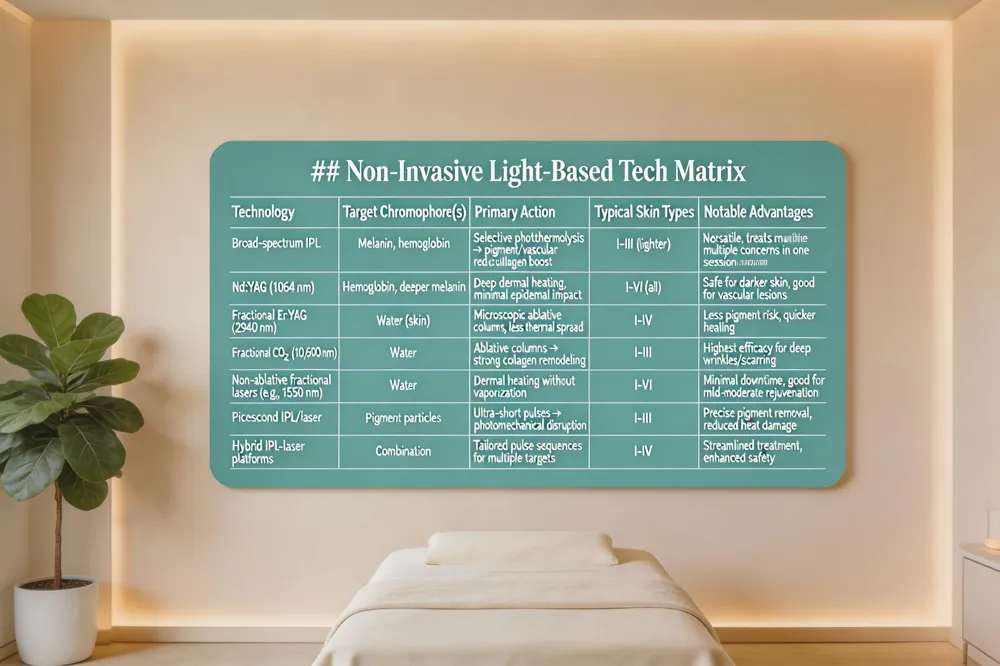 Non‑invasive light‑based technologies now dominate cosmetic skin care. Broad‑spectrum IPL (Intense Pulsed Light) targets melanin and hemoglobin to fade sun spots, rosacea redness, spider veins, and mild acne scarring, while stimulating collagen for smoother texture. Non‑ablative lasers—including Nd:YAG 1064 nm, fractional Er:YAG, and 1550 nm fractional CO₂—heat the dermis without vaporizing the epidermis, prompting neocollagenesis with little downtime. Fractional devices create micro‑thermal columns that accelerate healing and reduce risk of pigment changes.
Safety and efficacy are reinforced by FDA clearance, integrated cooling systems, and low fluence settings that keep erythema brief (typically 24‑48 hours). Clinical data show 70 % improvement in sun‑damage signs after a series of 3‑6 IPL sessions and comparable collagen gains with non‑ablative lasers after 4‑6 treatments.
Customization for diverse skin tones is achieved by selecting longer wavelengths (e.g., Nd:YAG) and adjusting fluence, allowing patients from Fitzpatrick I‑VI to benefit while minimizing hyper‑pigmentation risk.
Emerging trends include hybrid platforms that combine IPL with fractional laser, picosecond pulses for ultra‑precise pigment disruption, and AI‑driven protocols that tailor pulse parameters in real time. These advances promise faster results, enhanced safety, and broader applicability for natural, long‑lasting rejuvenation.
Achieving Natural, Long‑Lasting Radiance
Key takeaways: IPL and non‑ablative laser therapies improve pigment, redness, texture and fine lines by delivering broadband or fractional light that stimulates collagen without removing the epidermis. Results appear after three to six sessions spaced four weeks apart, with mild redness that fades within a few days.
Personalized treatment planning: A board‑certified specialist evaluates skin type, concerns and history, then chooses optimal wavelengths, fluence and passes. Protocols may combine IPL for vascular and pigmented lesions with fractional laser columns for texture, creating a single plan that targets age spots, rosacea, enlarged pores or mild scarring.
Commitment to safe, effective care: Clinics use FDA‑cleared settings, cooling devices and pre‑treatment sun avoidance, while post‑care includes SPF 30+ sunscreen, gentle moisturizers and follow‑up to secure natural, lasting results for the client overall and satisfaction.