Why Sequencing Matters
Principles of treatment layering
Effective skin rejuvenation relies on understanding how treatments interact. A staged approach—starting with non-invasive modalities to build skin resilience, then progressing to deeper remodeling—minimizes cumulative trauma and allows each step's results to inform the next.
This layering targets different aging components: surface renewal first, then stromal collagen induction, and finally volume restoration. A minimum interval of 2–4 weeks between invasive procedures permits adequate healing and collagen remodeling.
Impact on downtime and outcomes
Proper sequencing directly affects recovery. When ablative laser resurfacing follows filler injections too closely, product diffusion or edema can occur. Conversely, performing neuromodulators before resurfacing creates a smoother canvas, reducing the risk of inaccurate placement.
Patients following a staged plan typically experience more predictable downtime and cumulative aesthetic gain. A typical protocol might span 6–12 weeks, allowing each modality to contribute without overlapping recovery periods.
Clinical evidence supporting staged protocols
Dermatologic literature underscores the value of sequencing. Controlled studies show that combining BBL (broadband light) with fractional laser resurfacing in a planned order yields superior texture and tone improvement compared to standalone treatments.
According to the American Society for Dermatologic Surgery, 68% of dissatisfied patients attributed poor outcomes to inadequate consultation—not the treatments themselves. A structured protocol, guided by skin type and goals, reduces this risk. Evidence supports starting with surface renewal, progressing to stromal remodeling, and concluding with volumizing procedures for natural, lasting rejuvenation. | Treatment Stage | Typical Modalities | Interval Required | | --- | --- | --- | | Surface renewal | IPL, superficial peels | 2–4 weeks before deeper work | | Stromal remodeling | Microneedling, fractional laser | 4–6 weeks between sessions | | Volume restoration | Fillers, Sculptra | 4–6 weeks after resurfacing |
Understanding Med Spa vs. Day Spa
What is a med spa and how is it different from a regular day spa?
A medical spa, or med spa, blends the atmosphere of a day spa with the clinical expertise of a medical practice. It offers medical-grade aesthetic treatments like Botox, dermal fillers, laser therapies, and chemical peels, all performed or supervised by licensed healthcare professionals. This is a key distinction from a regular day spa, which focuses on relaxation services such as massages, basic facials, and body wraps, provided by licensed aestheticians or massage therapists without medical oversight.
Staff Qualifications and the Role of the Medical Director
The qualifications of the staff are another critical difference. A med spa operates under the supervision of a Medical Director (MD/DO), who oversees all clinical protocols. Other staff, such as Nurse Practitioners, Physician Assistants, Registered Nurses, and licensed aestheticians, each have defined scopes of practice for performing and assisting with procedures. In contrast, a day spa’s services are typically provided by estheticians and massage therapists, focusing on wellness and relaxation rather than clinical outcomes.
Clinical vs. Relaxation-Focused Services
Your choice depends on your primary goal. Med spa treatments target specific cosmetic concerns like fine lines, volume loss, and sun damage, aiming for measurable clinical improvements in skin health and appearance. A day spa prioritizes stress relief, pampering, and overall well-being. While a day spa offers a relaxing escape, a med spa provides a path to significant, personalized aesthetic enhancement with a focus on safety and efficacy.
Evaluating ROI: Are Med Spa Treatments Worth It?
 When considering skin rejuvenation treatments, the value proposition is a primary concern. Assessing whether these treatments are worthwhile requires a clear-eyed look at their costs, evidence, and patient satisfaction data.
Are Med Spa Treatments Worth the Money?
The answer hinges on a simple distinction: medical-grade technology versus at-home care. Med spa treatments use devices like fractional lasers, radiofrequency, and controlled chemical peels—all backed by clinical studies—to stimulate deep structural changes that are unattainable with retail products. This typically means fewer sessions and more dramatic, enduring results.
Cost versus Long-Term Benefit
Here is a breakdown of how typical costs compare:
| Treatment | Typical Cost per Session | Longevity of Results | Key Benefits |
|---|---|---|---|
| At-Home Skincare Routine | $50-$200 per month | Ongoing | Surface-level hydration, mild exfoliation |
| Medical-Grade Facial | $150-$300 | 4-6 weeks | Deep cleansing, extraction, professional-grade serums |
| Chemical Peel (Light) | $100-$250 | 1-3 months | Improved texture, brightening, mild acne control |
| Microneedling | $300-$700 per session | 6-12 months | Collagen induction, scar and pore reduction |
| Laser Resurfacing (Fractional) | $1,000-$2,500 per session | 2-5 years | Deep wrinkle reduction, significant texture & tone improvement |
The initial investment for a clinical procedure is higher, but the biological impact on collagen production and cellular turnover justifies the expense for targeted concerns.
Evidence-Based Outcomes and Patient Satisfaction
Laser resurfacing is the most clinically validated rejuvenation modality for collagen remodeling. Research from 2021 shows a comprehensive, combined approach—integrating energy‑based devices with volume restoration—produces the most natural, long-lasting results. A 2025 survey, however, revealed that 68% of dissatisfied patients cite unrealistic expectations due to inadequate consultation, not the treatments themselves. The key is a personalized treatment plan and clear clinician communication. Ultimately, a staged investment in medical-grade procedures is a scientifically-backed method for achieving significant, sustained skin improvement.
Current Cutting‑Edge Rejuvenation Modalities
What are the latest laser advancements like ResurFX and Fraxel DUAL?
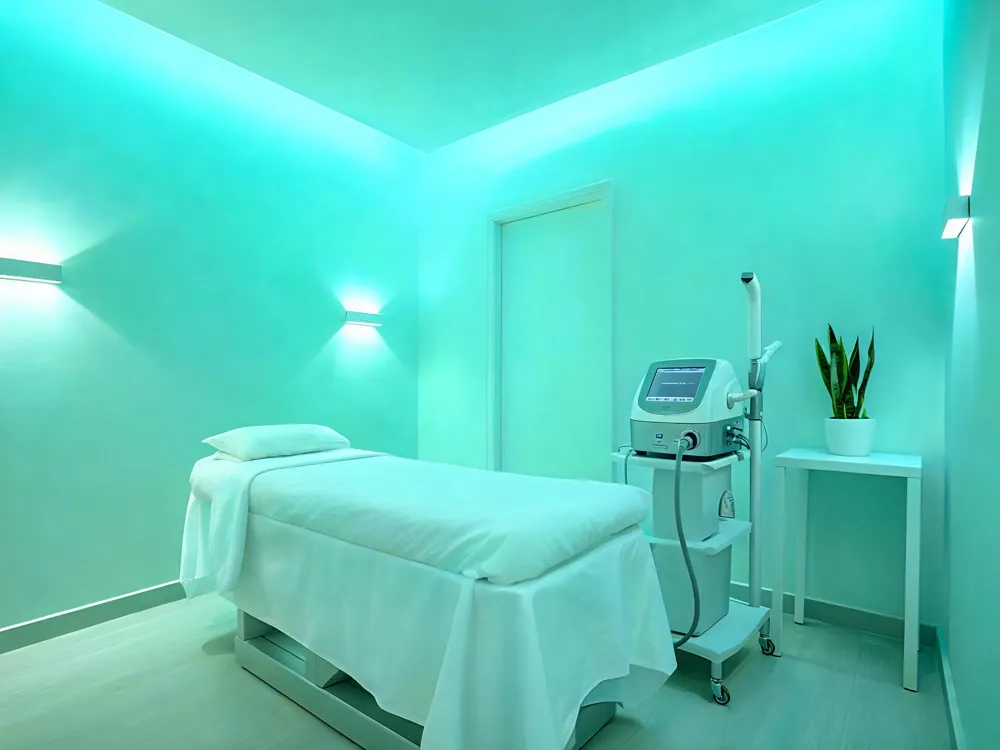
Modern laser technology now offers powerful results with reduced downtime. ResurFX™ is a non‑ablative fractional laser that works by creating microscopic columns of thermal injury in the skin. This stimulates collagen remodeling and smooths texture, making it ideal for fine lines, sun damage, and uneven tone without removing the outer skin layer. Fraxel DUAL is another leading fractional laser, using two different wavelengths to treat superficial pigmentation and deeper wrinkles or scars. Both treatments are effective for a wide range of skin types and typically require only 1–3 days of mild redness, allowing patients to resume daily activities quickly.
How does ultrasound (Ultherapy) and Tixel technology work?
Unlike lasers that target the skin's surface, Ultherapy® uses microfocused ultrasound energy to heat deeper foundational layers—the same tissue addressed in a surgical facelift. This stimulates collagen production and lifts the brow, chin, and neck over 2–3 months, offering a non‑surgical tightening option. Tixel® takes a different approach, using a heated titanium tip to transfer controlled thermal energy into the skin. This creates micro‑channels for rejuvenation, improving the appearance of fine lines, pigmentation, and texture. Its advantage is a minimal recovery period, often just 1–2 days of slight redness.
What role do LED and other light‑based therapies play?
LED (Light Emitting Diode) therapy is a gentle, zero‑downtime treatment that uses specific visible wavelengths to target different skin concerns. Red light penetrates deeply to boost collagen and reduce inflammation, while blue light targets acne‑causing bacteria. These therapies are excellent for maintenance, calming sensitive skin, and enhancing results after more intensive procedures like laser or microneedling. Patients often schedule a series of short sessions to gradually improve skin clarity and firmness. For a complete approach, many combine these light therapies with neurotoxins for dynamic wrinkles or dermal fillers to restore volume, creating a personalized, naturally rejuvenated outcome.
Core Effective Treatments and Their Mechanisms
What Are the Most Effective skin rejuvenation treatments?
A variety of clinically proven treatments form the foundation of modern skin rejuvenation. Microneedling creates controlled micro-injuries that stimulate the body's natural collagen and elastin production, improving texture, fine lines, and scarring. When combined with radiofrequency (RF) energy, as in Morpheus8, the treatment delivers deeper thermal stimulation for enhanced skin tightening and laxity correction, making it safe for all skin tones.
Laser resurfacing remains a cornerstone for dramatic improvement. Ablative lasers like CO₂ and Er:YAG remove outer skin layers to stimulate profound collagen remodeling, ideal for significant photoaging and wrinkles, though they require 7–14 days of downtime. Non-ablative and fractional lasers offer a gentler approach, heating the dermis to boost collagen with minimal recovery, making them suitable for mild laxity, vascular concerns, and overall texture refinement.
Chemical peels use acidic solutions to accelerate exfoliation and collagen remodeling. Superficial peels brighten skin and manage mild acne, while medium-depth peels address moderate pigmentation and fine lines. Radiofrequency (RF) tightening, which heats the dermis to trigger collagen contraction and synthesis, is broadly safe and effective for skin firmness without downtime. The most effective plans often combine these modalities for synergistic results. | Treatment | Mechanism | Best For | Downtime | |---|---|---|---| | Microneedling + RF | Micro-injuries + thermal heating | Laxity, scars, enlarged pores | 1–3 days | | Ablative Laser (CO₂) | Vaporizes outer skin layers | Deep wrinkles, severe photoaging | 7–14 days | | Non‑Ablative Laser | Dermal heating without surface removal | Mild laxity, redness, maintenance | Minimal to none | | Chemical Peels | Exfoliation and collagen stimulation | Pigmentation, fine lines, acne | 1–7 days | | Radiofrequency (RF) | Dermal heating for collagen contraction | Skin tightening, firmness | None |
Targeted Approach to Wrinkles
What is the best med spa treatment for wrinkles?
The most effective approach begins by distinguishing between active lines caused by muscle movement and static creases present at rest. Neuromodulators like Botox, Dysport, and Xeomin are the gold-standard for dynamic wrinkles, including forehead lines, crow's feet, and the frown lines between the brows. By relaxing the underlying muscles, these injections soften existing lines and prevent them from deepening over time, with results typically lasting three to four months.
For static wrinkles and folds etched into the skin, dermal fillers offer a powerful solution. Hyaluronic acid fillers such as Juvéderm and Restylane are injected beneath the crease to restore lost volume, plump the area, and smooth the skin's surface. Commonly treated areas include nasolabial folds and marionette lines, with effects lasting from six to eighteen months depending on the product.
To address overall skin texture and firmness, collagen-stimulating lasers and chemical peels provide complementary benefits. Fractional CO₂ and erbium lasers create micro-injuries that trigger deep collagen remodeling, improving fine lines and skin laxity over several months. Medium-depth chemical peels, such as TCA, accelerate exfoliation and stimulate new collagen, making them ideal for fading superficial wrinkles and pigmentation.
For optimal anti-aging results, combining these modalities—such as starting with a neuromodulator for dynamic lines, followed by a filler for volume, and concluding with a laser or peel for texture—delivers a more comprehensive and longer-lasting rejuvenation. A consultation will help determine the ideal sequence for your unique concerns. | Treatment Modality | Primary Target | Duration of Results | |:---|:---|:---| | Neuromodulators (Botox, Dysport) | Dynamic wrinkles (forehead, crow's feet, frown lines) | 3–4 months | | Dermal Fillers (Juvéderm, Restylane) | Static creases, volume loss (nasolabial folds) | 6–18 months | | Collagen-Stimulating Lasers (CO₂, Er:YAG) | Skin texture, laxity, fine lines | 12–24 months | | Chemical Peels (TCA) | Superficial wrinkles, pigmentation, texture | Several months to a year |
Comprehensive Anti‑Aging Protocol: Turning Back the Clock 20 Years

How can I take 20 years off my face?
Taking 20 years off your face is possible with a combination of non-surgical treatments that address the root causes of aging—like volume loss, collagen depletion, and skin laxity.
Targeting the Deepest Layers of Aging
Radiofrequency-based facelifts, such as FaceTite and AccuTite, are minimally invasive procedures that deliver controlled heat to the deeper layers of the skin. This energy tightens existing collagen and stimulates the production of new collagen, effectively addressing sagging skin and jowls without the downtime of a surgical facelift.
Restoring Structure and Volume
A common reason for an aged appearance is the loss of facial volume. Procedures like Morpheus8 combine microneedling with radiofrequency to remodel collagen deep within the skin, improving texture and laxity. Adding volume with collagen-stimulating Sculptra can restore lost fullness in the cheeks and temples over several months, providing a natural-looking lift. Thread lifts, such as the MINT lift, offer an immediate lift for a sharper jawline and improved facial contour, further reversing the signs of aging. PRP therapy uses your own platelets to rejuvenate skin naturally, enhancing overall skin quality.
Smoothing the Surface
Finally, laser skin resurfacing smooths away fine wrinkles and sun damage, creating a refreshed and unified complexion. By thoughtfully sequencing these minimally invasive procedures, you can achieve dramatic, natural-looking results that turn back the clock.
| Treatment | Primary Action | Results Timeline |
|---|---|---|
| FaceTite / AccuTite | Skin tightening via radiofrequency | Gradual over 3-6 months |
| Morpheus8 | Collagen remodeling & skin texture | 3-6 sessions, visible at 3 months |
| Sculptra | Deep volume restoration | Gradual over 3-6 months |
| MINT Thread Lift | Mechanical lift and contouring | Immediate, lasting 1-3 years |
| PRP & Laser Resurfacing | Skin rejuvenation & surface smoothing | Several weeks to months |
Optimizing Skincare Routine & Timing for Maintenance
What is the correct order to do my skincare routine?
For your morning routine, start with a gentle cleanser, then apply eye cream, followed by an antioxidant serum like vitamin C to boost sun protection and brighten skin. Next, use a moisturizer to seal in hydration, and finish with a broad-spectrum sunscreen of at least SPF 30. This sequence follows the golden rule of applying products from lightest to richest, ensuring each layer absorbs effectively.
At night, begin with a double cleanse (oil-based then water-based) to remove makeup and impurities. Then, apply eye cream, a renewing serum such as a retinoid to stimulate collagen, and finally a night cream for deep repair. Focus on protection in the morning and repair overnight for optimal results.
What is the ideal age to start med spa treatments?
Many clients start preventive treatments in their late 20s to early 30s to address early signs like fine lines before they become more established. Starting early helps maintain skin firmness and delay the need for more invasive procedures. A consultation can help determine the best time to begin, as meaningful improvement is possible at any age.
Integrating Professional Treatments for Maintenance
For long-term maintenance, a typical schedule includes bi-annual chemical peels, quarterly hydrating facials, and annual laser or radiofrequency sessions. Sequencing starts with non-invasive topicals to build resilience, then progresses to deeper modalities like fractional laser or microneedling, and reserves surgical options for advanced aging. This layered approach optimizes results while respecting recovery time. A consultation with a qualified provider ensures a personalized plan based on your skin type and goals.
| Treatment | Ideal Frequency | Main Benefit |
|---|---|---|
| Chemical Peel | Every 8–12 weeks | Surface brightening, texture |
| HydraFacial | Quarterly | Deep cleansing, hydration |
| Laser/RF Session | Annually | Collagen remodeling, firmness |
| Microneedling | 2–4 times per year | Scar, pore, and texture improvement |
Putting It All Together
Personalized Sequencing for Lasting Results
A successful rejuvenation plan is not one-size-fits-all. It combines treatments in a deliberate order to address each layer of aging—from surface texture to deep structural support. Starting with non-invasive options helps build skin resilience before moving to deeper remodeling and finally volume restoration.
Importance of Professional Oversight
With 68% of patient dissatisfaction linked to poorly set expectations, a thorough consultation with a qualified medical professional is essential. A clinician assesses your skin type, concerns, and goals to design a safe, effective timeline and prevent complications like post-inflammatory hyperpigmentation.
Commitment to Sun Protection and Homecare
Final results depend heavily on your daily routine. Consistent use of broad-spectrum sunscreen is non-negotiable. Pairing medical-grade serums—like retinoids and vitamin C—with your in-office treatments maximizes collagen production and maintains radiance between appointments.