Why Myth‑Busting Matters
Botulinum toxin type A (Botox, Dysport, Xeomin) has become a cornerstone of modern aesthetic medicine, delivering temporary muscle relaxation that smooths dynamic wrinkles while preserving natural expression. Patients often encounter myths—such as that different brands yield distinct results, that diffusion varies dramatically, or that post‑treatment restrictions are essential—yet robust studies show outcomes depend on dose, technique, and individual anatomy rather than brand alone. Providing evidence‑based information dispels these misconceptions, empowers clients to make informed choices, and ensures that treatments are tailored for safe, natural‑looking results.
Neurological and Systemic Safety of Botulinum Toxin
 Botox’s neurological side effects are rare and usually limited to the injection site. Occasional muscle weakness, ptosis, or dysphagia can occur if the toxin spreads, but serious central effects are infrequent. The toxin does not cross the blood‑brain barrier; its impact on the brain is indirect, altering facial‑feedback loops that may modestly affect emotion processing. Long‑term neurological complications are exceedingly uncommon; most patients experience only brief, reversible symptoms, and permanent damage has not been documented in cosmetic use. Toxicologically, purified botulinum toxin is extremely potent in raw form, yet aesthetic doses are a fraction of the lethal amount, making it safe when administered by qualified professionals. The biggest risk remains unintended spread to nearby muscles, which can cause drooping eyelids or vision changes, underscoring the importance of skilled injection technique and proper dosing.
Common Myths About Fillers, Botox, and Dysport
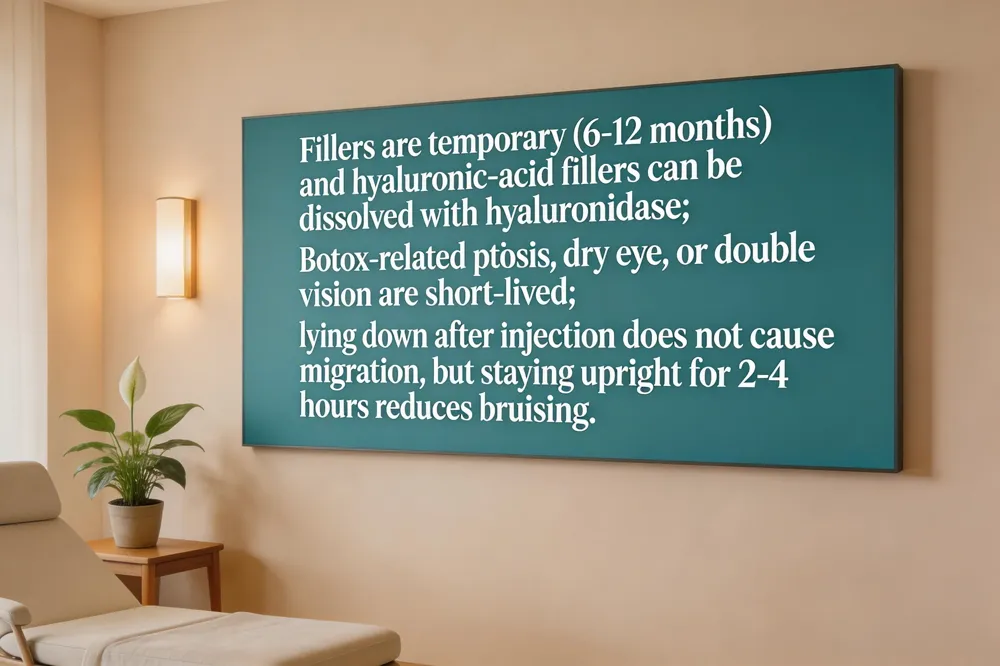 Many patients wonder about filler permanence, but FDA‑approved dermal fillers are temporary—most last six months to a year before the body naturally breaks them down. Allergic reactions are rare, especially with hyaluronic‑acid fillers that can be dissolved with hyaluronidase if needed, and removal usually requires specific enzymes or surgical techniques, not a simple "pull‑out."
Eye‑related Botox side effects such as brief ptosis, dry eye, or rare double vision are short‑lived and resolve within weeks; lubricating drops and an experienced injector minimize risk. A headache two weeks post‑treatment is uncommon but may stem from lingering muscle adjustment—over‑the‑counter pain relievers, hydration, and cool compresses help, while persistent pain should prompt a provider call.
Post‑procedure myths: lying down for a few hours after Botox won’t cause toxin migration, but staying upright for 2‑4 hours reduces bruising. Light activity is fine; avoid vigorous exercise for 24‑48 hours to let the product settle.
Overall, when performed by qualified professionals, fillers, Botox, and Dysport are safe, produce natural results, and have only mild, temporary side effects.
Practical Guidance for Upper‑Face and Masseter Treatments
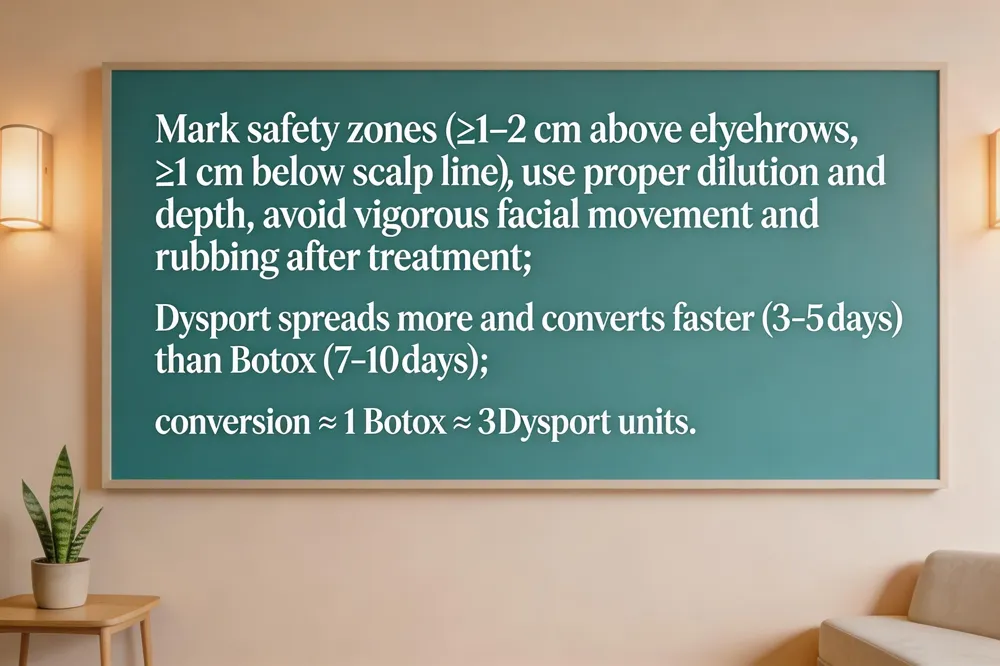 Avoiding complications on the upper face starts with a thorough history and anatomy review, marking safety zones (≥1–2 cm above eyebrows, ≥1 cm below scalp line) and using the recommended dilution and injection depth. Tailor dot placement to each muscle pattern and advise patients to avoid vigorous facial movement, lying down, and rubbing for several hours after treatment.
Botox vs Dys Dys for masseter: both relax the muscle, but Dysport’s smaller protein spreads more , often requiring fewer injection points and a faster onset (3‑5 days vs 7‑10 days for Botox). Effects last 3‑5 months; choice depends on desired speed and anatomy.
Botox vs Dysport units: units are not interchangeable; roughly 1 Botox unit ≈ 3 Dysport units, so 20 Botox units correspond to ~60 Dysport units.
50 Botox units ≈ 125‑150 Dysport units, based on a 2.5‑3 : 1 conversion ratio.
Rule of 3 in Botox: subtle improvement by day 3, peak by week 3, and results last ~3 months before retreatment.
What to know before Botox: schedule at least a week before events, stop blood‑thinners 24‑48 h prior, avoid intense exercise and heat for 24 h, and choose a qualified injector.
Inflammatory response: mild swelling, redness, or tenderness may occur at the injection site and usually resolves on its own; severe or spreading symptoms require medical evaluation.
Product Comparisons: Botox, Dysport, Xeomin, and More
 When choosing a neuromodulator, the formulation matters: Botox and Dysport contain accessory proteins that stabilize the toxin, while Xeomin is a “naked” toxin without these proteins, potentially lowering antibody risk.
Onset, Diffusion, and Duration – Dysport often shows visible improvement within 2‑3 days and diffuses more broadly, making it ideal for larger areas such as the forehead. Botox’s effects appear 3‑7 days later and stay more localized, useful for precise zones like crow’s feet. Xeomin’s onset (≈ 3‑5 days) and duration (3‑6 months) mirror Botox, but its minimal protein load may reduce diffusion‑related side effects.
Cost Considerations – Botox averages $15 per unit, Dysport about $5 per unit, yet roughly three Dysport units equal one Botox unit, so overall session costs are comparable (typically $500‑$1,200). Xeomin pricing falls between the two.
Patient Reviews and Experiences – Users praise Dysport for its rapid, natural‑looking spread across larger areas, while many appreciate Botox’s precise, lasting results and subtle appearance. Satisfaction hinges on the injector’s skill and individualized dosing plans.
Patient Experiences, Lifestyle, and Future Trends
 What looks better, Botox or Dysport? Both give smoothness; Dysport’s broader diffusion suits zones like the forehead, working in 2‑3 days. Botox offers precise control for fine lines such as crow’s feet, with onset a week later.
Botox vs Dysport reddit Users note Dysport’s start and easier spread, while many favor Botox for work. 2.5–3 Dysport units per Botox unit.
What I wish I knew before getting Botox? Schedule a week before, stop blood‑thinners 24–48 h prior, avoid exercise and forward‑leaning for 24 h, choose an injector.
Botox side effects pictures Photos show mild bruising, redness or swelling; images capture brief eyelid droop that resolves weeks.
Reasons not to get Botox Contraindications include pregnancy, neuromuscular disease, toxin allergy. Issues can involve systemic spread, vision changes, swallowing difficulty; unlicensed providers raise risk.
Is Botox 100% safe? No. It’s safe with professionals, but mild side effects are common and severe reactions can occur; proper screening lowers risk.
Putting the Myths to Rest
Recent,‑reviewed research consistently shows that the most common myths about botulinum‑toxin neuromodulators are unfounded. Different BoNT‑A products (Botox®, Dysport®, Xeomin®) do not produce fundamentally different outcomes; efficacy hinges on dose, injection technique, and individual anatomy rather than brand‑specific diffusion profiles. Protein load, preservative‑free saline, and injection volume have negligible clinical impact when the practitioner follows proper reconstitution and dosing protocols. Neutralizing antibodies are rare at the low aesthetic doses used today, and post‑treatment restrictions such as head‑down positioning or massage lack solid evidence. Because these findings stem from large‑scale, peer‑reviewed studies, the safest path forward is to seek care from a board‑certified dermatologist, plastic surgeon, or qualified injector who tailors treatment to each patient’s anatomy and goals. Looking ahead, ongoing advances in formulation purity and delivery devices promise even more predictable, natural‑looking results, making neuromodulators a cornerstone of personalized, non‑invasive facial rejuvenation.