Why DNA Repair Matters for Longevity and Skin Vitality
Every day our cells incur tens of thousands of DNA lesions from metabolic by‑products, ultraviolet light, pollution and everyday stressors. When these lesions are promptly fixed by pathways such as base excision repair, nucleotide excision repair, mismatch repair and double‑strand‑break repair, genomic integrity is maintained and cells function normally. As we age, the efficiency of each pathway wanes—mismatch repair shows microsatellite instability, BER enzyme levels (APE1, Pol β) drop, NER removes UV‑induced cyclobutane dimers slower by ~0.6 % per year, and NHEJ becomes error‑prone. The cumulative loss of repair capacity fuels the appearance of fine lines, loss of elasticity, pigment spots and actinic keratoses, while systemically it drives stem‑cell exhaustion, chronic inflammation and higher cancer risk. Restoring repair—through lifestyle choices, NAD⁺ boosters, or topical liposome‑encapsulated enzymes like photolyase and T4 endonuclease—offers a scientifically grounded route to both healthier skin and greater longevity.
The Science of DNA Damage and Repair
Key Points
| Process | Primary Lesions | Main Repair Pathway(s) | Age‑Related Decline |
|---|---|---|---|
| Oxidative stress | Single‑strand breaks, oxidized bases | Base Excision Repair (BER) | ↓ AP‑site repair; ↓ polymerase β & APE1 activity |
| UV exposure | Cyclobutane pyrimidine dimers (CPDs), (6‑4) photoproducts | Nucleotide Excision Repair (NER) | ~0.63 % loss per year; slower CPD removal |
| Replication stress | Double‑strand breaks (DSBs) | Homologous Recombination (HR) & Non‑Homologous End Joining (NHEJ) | NHEJ becomes error‑prone; Ku70/Ku80 ↓ |
| Mismatch errors | Base mismatches, microsatellite instability | Mismatch Repair (MMR) | ↑ microsatellite instability with age |
Takeaway: DNA damage accumulates across the lifespan; enhancing BER, NER, HR/NHEJ, and MMR can mitigate aging‑related genomic instability.
 DNA damage continuously accrues in both nuclear and mitochondrial genomes from the moment we are born. Everyday exposures—UV radiation, pollutants, and the metabolic by‑product reactive oxygen species—create thousands of lesions per cell each day, including single‑strand breaks, oxidized bases, and UV‑induced cyclobutane pyrimidine dimers. Over time, repair pathways such as base excision repair (BER), nucleotide excision repair (NER), and double‑strand break (DSB) repair become less efficient, leading to a buildup of mutations and genomic instability. This is the core of the DNA‑damage theory of aging: unrepaired lesions trigger cellular senescence, apoptosis, or erroneous gene expression, accelerating tissue decline. The somatic DNA‑damage theory extends this idea to non‑reproductive cells, where accumulated mutations impair stem‑cell function and drive age‑related diseases like cancer and neurodegeneration. Because DNA damage sits at the intersection of many aging hallmarks—telomere attrition, epigenetic drift, chronic inflammation—it is considered a central driver of the aging process. Enhancing repair, whether through lifestyle (antioxidant‑rich diet, adequate sleep), systemic NAD⁺ boosters, or topical DNA‑repair enzymes (photolyase, T4 endonuclease V) encapsulated in liposomes, can help preserve genomic integrity. In the skin, this translates to fewer wrinkles, reduced hyperpigmentation, and a lower risk of actinic keratoses, supporting a graceful, natural‑looking age‑defying result.
DNA Repair Pathways Across the Lifespan
Age‑Related Changes in Major Repair Pathways
| Pathway | Typical Age‑Related Change | Functional Impact |
|---|---|---|
| BER | 50‑75 % activity loss; reduced AP‑site incision | Accumulation of oxidative base lesions |
| NER | ~0.63 % per year decline; slower CPD/6‑4PP removal | Increased photo‑aging, skin DNA damage |
| MMR | Decreased mismatch correction; higher microsatellite instability | Elevated mutation burden |
| NHEJ | Reduced efficiency, more deletions; Ku70/Ku80 ↓ | Impaired DSB repair, genomic instability |
| HR | Limited usage in somatic cells; age‑related shift | Less accurate DSB resolution |
Magnesium Note: Mg²⁺ is a vital co‑factor for NER, BER, and MMR enzymes, supporting catalytic activity.
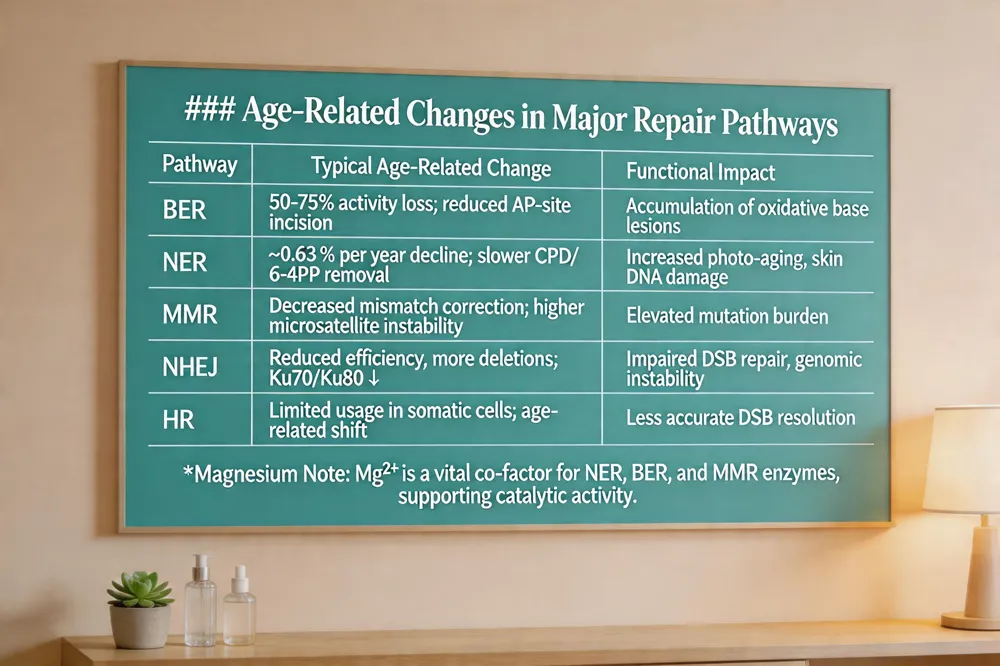 DNA repair efficiency wanes with age, a cornerstone of the DNA‑repair theory of aging. This theory posits that the gradual build‑up of unrepaired lesions—single‑ and double‑strand breaks, oxidative base modifications, and cross‑links—overwhelms cellular maintenance systems, driving genomic instability and altered gene expression, and senescence. Premature‑aging syndromes caused by inherited repair defects and the rise of nuclear and mitochondrial DNA damage in post‑mitotic tissues support this view.
Base Excision Repair (BER) decline – In older cells, basal AP‑site levels rise, mitochondrial incision activity of DNA glycosylases and APE1 falls, and the inducibility of polymerase β and APE1 after damage is lost. Overall BER activity can drop 50‑75 % in aged mice, compromising oxidative DNA base removal.
Nucleotide Excision Repair (NER) and UV‑induced lesions – NER capacity diminishes ~0.63 % per year, slowing removal of UV‑induced cyclobutane pyrimidine dimers (CPDs) and (6‑4) photoproducts in skin fibroblasts and lymphocytes. Liposome‑encapsulated photolyase and T4 endonuclease V in sunscreens can restore up to 45 % of CPDs, mitigating photo‑aging.
Mismatch Repair (MMR) and microsatellite instability – Age‑related MMR decline is evident from increased microsatellite instability and reduced mismatch correction in older T‑cell clones.
Double‑strand break repair (NHEJ, HR) and Ku70/Ku80 – Non‑homologous end joining becomes less efficient and more error‑prone; Ku70/Ku80 expression and nuclear availability fall, contributing to longer deletions and impaired DSB repair. In contrast, homologous recombination usage shifts with age, but remains limited in somatic cells.
Does magnesium help with DNA repair? Mg²⁺ stabilizes DNA structure and acts as an essential cofactor for NER, BER, and MMR enzymes, supporting their catalytic activity.
Boosting DNA Repair: Lifestyle and Nutrition
Lifestyle & Nutrient Strategies to Support DNA Repair
| Strategy | Mechanism | Evidence |
|---|---|---|
| Vitamin C (ascorbic acid) | Cofactor for polymerases/ligases; scavenges ROS | Reduces chromosome aberrations, supports BER/NER |
| NAD⁺ precursors (NR, NMN) | Fuels PARP1 & SIRT1 → DNA‑damage response | ↓ DNA lesions, improves cellular resilience |
| Regular aerobic & resistance exercise | Improves circulation, up‑regulates antioxidant defenses | Strongest predictor of longevity |
| Adequate sleep (7‑9 h) | Maintains NAD⁺ homeostasis, limits PARP1 over‑activation | Supports both nuclear & mitochondrial repair |
| Magnesium intake | Stabilizes DNA, co‑factor for repair enzymes | Enhances NER, BER, MMR activity |
Bottom Line: Combining antioxidant‑rich diet, NAD⁺ boosters, and consistent physical activity creates a synergistic environment for optimal DNA repair.
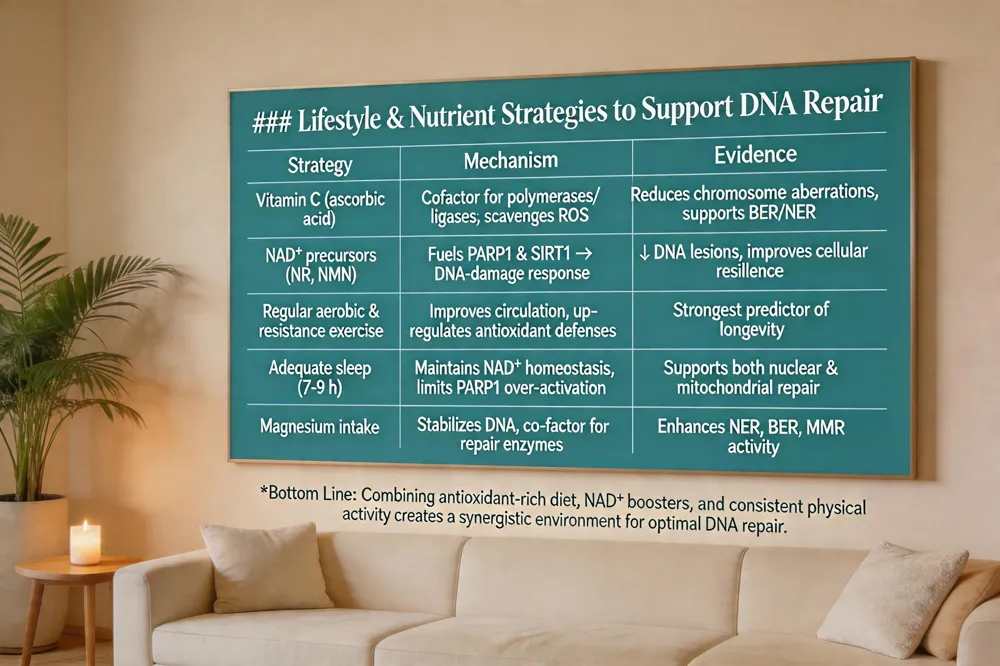 Maintaining robust DNA‑repair capacity is a cornerstone of healthy skin and graceful aging. Clinical evidence shows that antioxidant vitamins and minerals—especially vitamin C—serve as essential co‑factors for repair enzymes, scavenging reactive oxygen species (ROS) and preserving the activity of base‑excision and nucleotide‑excision pathways. Vitamin C (ascorbic acid) protects DNA from oxidative damage, reduces chromosome aberrations, and supports the function of polymerases and ligases that restore genome integrity.
Free‑radical theory – The free‑radical theory of aging posits that ROS generated by mitochondrial metabolism and UV exposure progressively oxidize DNA, lipids, and proteins, leading to visible signs such as fine lines and loss of elasticity. Antioxidants from diet or topical products neutralize these radicals, limiting damage and enhancing the skin’s natural repair processes.
NAD⁺ precursors, PARP1 and SIRT1 – NAD⁺ fuels PARP1 and SIRT1, enzymes that coordinate DNA‑damage response and mitochondrial health. Supplementation with nicotinamide riboside or NMN boosts NAD⁺ levels, re‑activating PARP1 and SIRT1, and has been shown to reduce DNA lesions and improve cellular resilience.
Physical activity – Daily movement is the single strongest predictor of longevity. Regular low‑intensity activity improves circulation, enhances antioxidant defenses, and supports efficient DNA repair, making it a vital component of any anti‑aging regimen.
In practice, combining a nutrient‑rich diet, targeted supplements, and consistent activity complements professional skincare—such as liposome‑encapsulated photolyase creams—to sustain DNA integrity and promote a youthful complexion.
Topical DNA Repair Enzymes in Skincare
Enzyme‑Based Skincare Summary
| Enzyme | Delivery | Primary Target | Clinical Benefit |
|---|---|---|---|
| Photolyase | Liposomal encapsulation + visible light activation | CPDs (UV‑induced) | 61 % CPD reduction vs. 35 % with SPF 50 alone |
| T4 Endonuclease V | Liposomal delivery (light‑independent) | CPDs & 6‑4PPs (NER initiation) | Restores up to 45 % of CPDs; improves skin texture |
| Bacterial nucleases (e.g., Micrococcus luteus) | Liposomal/mineral carriers | General DNA lesions | Lower matrix‑metalloproteinase‑1, protein carbonylation |
| Telomerase (experimental) | Topical gene‑therapy vectors | Telomere shortening | Extends telomere length, delays senescence (pre‑clinical) |
Key Products: ISDIN Eryfotona Actinica SPF 50+ (photolyase), Neova Total DNA Repair, Photozyme serum.
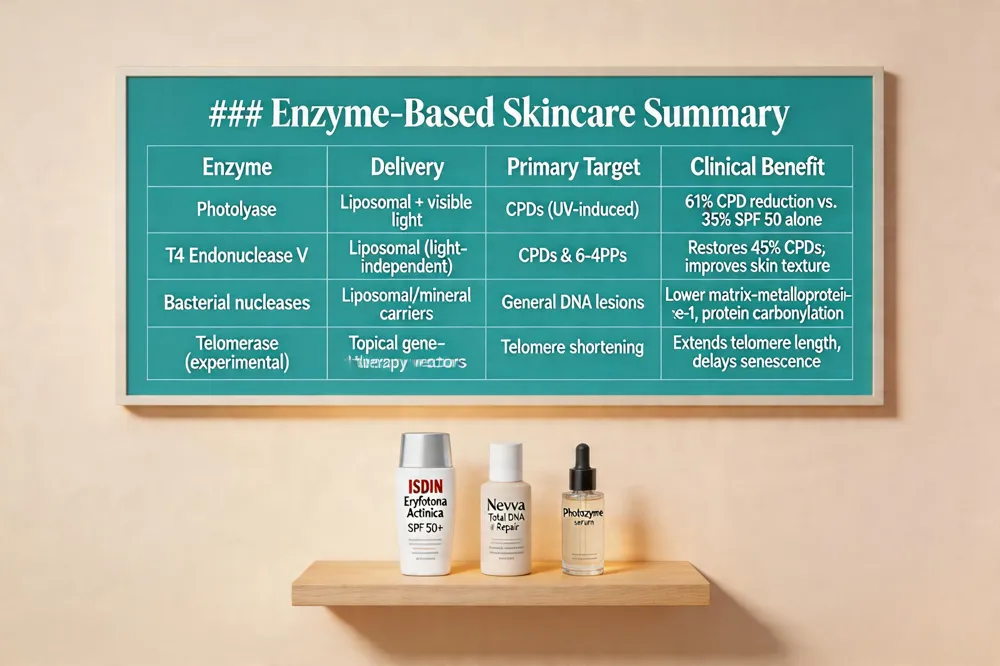 Photolyase is the work‑horse for cyclobutane pyrimidine dimer (CPD) repair. When delivered in liposomal carriers, it penetrates the stratum corneum, reaches keratinocyte nuclei and, after exposure to visible light, photoreactivates CPDs back to normal bases. T4 endonuclease V complements this by initiating nucleotide excision repair (NER) of CPDs without needing light, speeding the removal of both CPDs and 6‑4 photoproducts. Liposome encapsulation is essential for epidermal delivery; the nano‑vesicles protect the enzymes from degradation and facilitate passage through the lipid‑rich barrier, allowing consistent enzyme concentrations in viable skin layers.
Clinical data are compelling: a randomized trial of 28 actinic keratosis patients showed a 61 % reduction in skin CPDs with enzyme‑enhanced sunscreen versus 35 % with conventional SPF 50. Double‑blind studies of 60 volunteers reported lower matrix‑metalloproteinase‑1, protein carbonylation, and 8‑OHdG after repeated UV exposure, translating into visibly smoother fine lines, reduced scaling and improved pigmentation.
ISDIN DNA‑repair sunscreen – the Eryfotona Actinica line couples SPF 50+ zinc‑oxide filters with photolyase‑based DNA Repairsomes® to reverse UV‑induced lesions and diminish sunspots and fine lines. Best DNA‑repair skincare merges photolyase, micrococcus luteus nuclease and Arabidopsis‑derived repair proteins in liposomal or mineral carriers (e.g., Neova Total DNA Repair, Photozyme serum) for round‑the‑clock repair. Which enzyme protects DNA from ageing? Telomerase extends chromosomal telomeres, shielding chromosome ends from damage. Best sunscreen with DNA‑repair enzymes – ISDIN Eryfotona Actinica untinted SPF 50+ (photolyase) or its tinted Ageless Mineral counterpart. DNA‑repair enzymes in Korean skincare – brands such as Photozyme and NEOVA incorporate photolyase, bacterial nucleases and plant‑derived enzymes, working with fermented extracts and niacinamide to smooth fine lines, fade hyper‑pigmentation and reinforce barrier function.
Together, these advances show that topical DNA‑repair enzymes can meaningfully augment traditional photoprotection, offering a science‑backed route to healthier, more youthful skin.
Advanced Interventions and Clinical Trials
Emerging Anti‑Aging Interventions
| Intervention | Target | Current Status |
|---|---|---|
| Yamanaka‑factor partial reprogramming | Epigenetic clock reset, cellular rejuvenation | Human trials (ER‑100) in early phase |
| Telomerase activation | Telomere elongation, senescence delay | Pre‑clinical animal success; human trials pending |
| Hormone replacement (estrogen) | Collagen synthesis, skin thickness | Clinically used for menopausal skin aging |
| NAD⁺ precursors (NR, NMN) + PARP1 modulation | DNA‑damage response, mitochondrial health | Ongoing clinical studies showing reduced oxidative lesions |
FAQ Highlights:
- What enzyme reverses aging? Telomerase elongates telomeres.
- Best sunscreen with DNA‑repair enzymes? ISDIN Eryfotona Actinica SPF 50+ (photolyase).
- Hormonal effect on skin? Menopause‑related estrogen loss accelerates collagen breakdown.
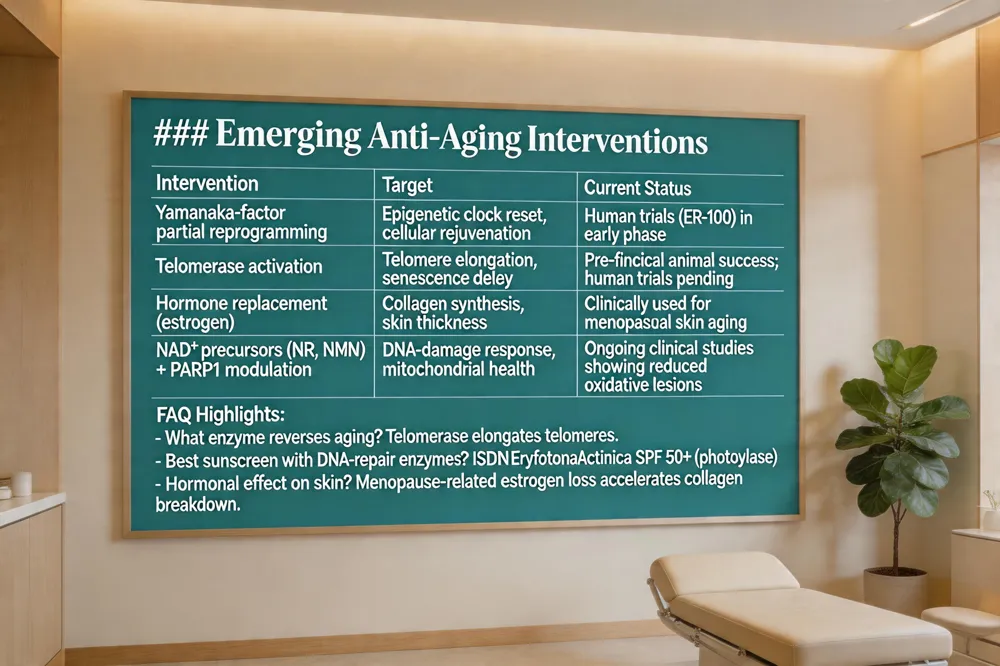 Recent breakthroughs are reshaping how aesthetic medicine tackles the biology of aging.
Partial programming and Yamanaka factors – Human trials, such as Life Biosciences’ ER‑100 study, now test a doxycycline‑controlled cocktail of Yamanaka‑type genes to reset epigenetic clocks in retinal cells. Early animal data showed reversible loss of function in eye, liver and kidney tissue, and the first human data will reveal whether transient expression can safely rejuvenate cells without tumor risk.
Telomerase activation – Telomerase adds repeat DNA to chromosome ends, restoring telomere length and delaying senescence. Experimental activators have improved tissue regeneration and immune competence in animal models, positioning telomerase as a flagship anti‑aging target for future skin‑health therapies.
Hormonal changes in women – Menopause brings a steep drop in estrogen, accelerating collagen breakdown, skin thinning and loss of elasticity. Many clients report heightened dryness and fine‑line formation, underscoring the need for personalized, hormone‑aware skincare regimens.
NAD⁺ precursors (NR, NMN) and PARP1 modulation – NAD⁺ precursors (NR, NMN) reactivate PARP1, a key DNA‑repair enzyme, while reducing DBC1‑mediated inhibition. Clinical work shows restored DNA repair capacity and reduced oxidative lesions, supporting smoother, firmer skin.
Key Q&A
- Reverse aging human trials: Yamanaka‑based partial reprogramming trials aim to reset epigenetic age and restore youthful function.
- What enzyme reverses aging?: Telomerase elongates telomeres, rejuvenating cellular health.
- Notable hormonal effect: Menopause‑induced estrogen loss drives collagen loss, skin thinning, and increased wrinkle depth.
- Telomeres: Protective chromosome caps that shorten with each division; preserving length sustains youthful skin turnover.
Together, these interventions complement non‑invasive aesthetic procedures, offering a science‑backed path to natural, lasting results.
Integrating DNA Repair into a Graceful Aging Regimen
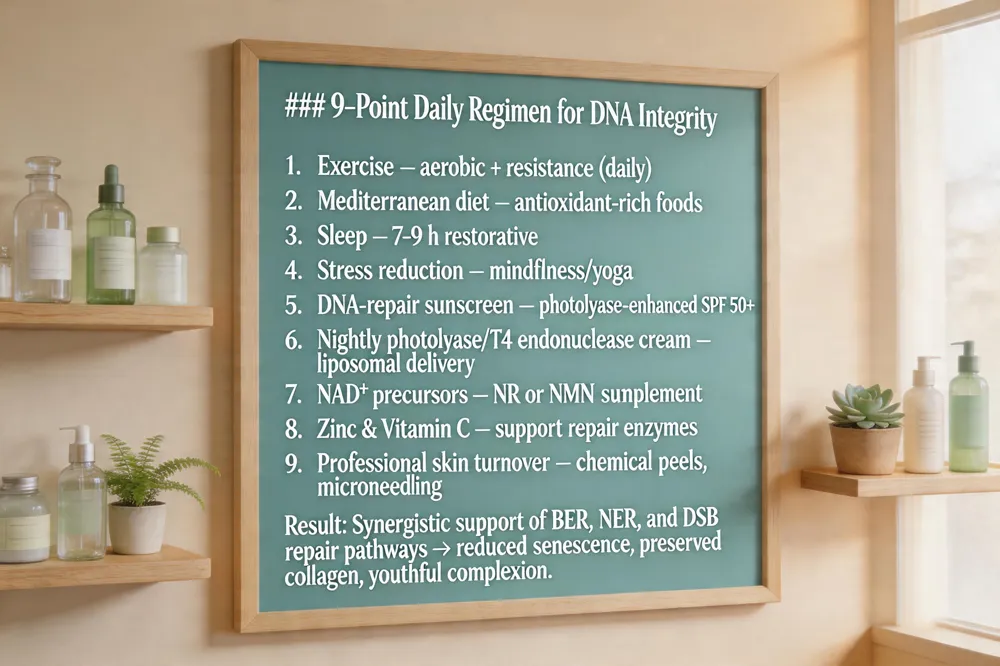
9‑Point Daily Regimen for DNA Integrity
- Exercise – aerobic + resistance (daily)
- Mediterranean diet – antioxidant‑rich foods
- Sleep – 7‑9 h restorative
- Stress reduction – mindfulness/yoga
- DNA‑repair sunscreen – photolyase‑enhanced SPF 50+
- Nightly photolyase/T4 endonuclease cream – liposomal delivery
- NAD⁺ precursors – NR or NMN supplement
- Zinc & Vitamin C – support repair enzymes
- Professional skin turnover – chemical peels, microneedling
Result: Synergistic support of BER, NER, and DSB repair pathways → reduced senescence, preserved collagen, youthful complexion.
 Daily habits that support DNA integrity
Consistent sleep (7‑9 hrs), regular aerobic‑plus‑strength exercise, balanced hydration, and stress‑reduction practices keep NAD⁺ levels high and limit PARP1 over‑activation, preserving both nuclear and mitochondrial DNA. A Mediterranean‑style diet rich in antioxidants (berries, leafy greens, olive oil) supplies the cofactors needed for base‑excision repair (BER) and nucleotide‑excision repair (NER).
Nine powerful anti‑aging strategies
- Exercise daily (aerobic, resistance, flexibility).
- Eat whole‑food, anti‑inflammatory meals.
- Prioritize restorative sleep.
- Practice mindfulness or yoga to curb cortisol.
- Protect skin with a DNA‑repair‑enhanced sunscreen.
- Apply a liposome‑encapsulated photolyase/T4 endonuclease cream each night.
- Supplement NAD⁺ precursors (NR or NMN) to boost PARP1 and SIRT1.
- Include zinc and vitamin C to support repair enzymes.
- Schedule regular skin‑cell turnover treatments (chemical peels, microneedling) to stimulate fresh, repair‑competent cells.
Best sunscreen with DNA repair enzymes for everyday use
ISDIN Eryfotona Actinica SPF 50+ (untinted) combines zinc‑oxide filters with photolyase, reducing UV‑induced CPDs by ~45 % in clinical trials. The tinted Ageless Mineral version offers the same protection with a natural finish, making it ideal for daily wear.
Combining lifestyle, nutrition, and topical DNA repair
When a robust antioxidant diet, adequate NAD⁺, and disciplined sun protection converge, the skin’s intrinsic repair pathways (BER, NER, DSB‑repair) operate at peak efficiency, slowing senescence, preserving collagen, and promoting a graceful, youthful appearance.
9 powerful ways to reverse aging
- Exercise regularly.
- Mediterranean diet.
- High‑quality sleep.
- Stress management.
- Strength training + calcium/vitamin D.
- Daily DNA‑repair sunscreen.
- Nightly photolyase serum.
- NAD⁺ precursors.
- Regular professional skin rejuvenation.
What habits age you the most?
Skipping exercise, chronic dehydration, excess sugar, stress, poor sleep, and unprotected UV exposure accelerate collagen breakdown, oxidative DNA damage, and cellular senescence.
Best sunscreen with DNA repair enzymes
ISDIN Eryfotona Actinica SPF 50+ (photolyase) and its tinted counterpart, plus Neova Total DNA Repair, are top‑rated choices for daily, broad‑spectrum protection.
Key Takeaways for a DNA‑Focused Longevity Strategy
1. Support your cells’ repair engine with lifestyle and nutrition. A diet rich in antioxidants (berries, leafy greens, green tea) and a regular exercise routine lower ROS, preserve NAD⁺ levels, and keep PARP1 and SIRT1 active, which are essential for base‑excision and nucleotide‑excision repair. Adequate sleep and stress‑management further reduce chronic inflammation that accelerates DNA damage.
2. Upgrade your daily sun defense with enzyme‑infused products. Liposome‑encapsulated photolyase and T4 endonuclease V, when combined with a broad‑spectrum SPF 50 sunscreen, cut UV‑induced cyclobutane pyrimidine dimers by 40‑60 % and lower downstream MMP‑1 and IL‑6 expression, helping to prevent fine lines, pigment spots, and actinic keratoses. Apply the enzyme serum each morning after cleansing and re‑apply sunscreen every two hours for continuous protection and repair.
3. Maintain systemic vigor. Stay physically active, prioritize 7‑9 hours of quality sleep, and consider NAD⁺ precursors (NR, NMN) or modest antioxidant supplements to boost PARP‑mediated repair pathways throughout the body. Together, these habits create a holistic, DNA‑centric approach that supports youthful skin, stem‑cell health, and overall longevity.