Why IPL Is the Go‑to Solution for Even Skin Tone
Intense Pulsed Light (IPL) relies on broad‑spectrum light technology that delivers multiple wavelengths in a single pulse. This allows the device to simultaneously target melanin (pigment) and hemoglobin (blood vessels) without damaging the surrounding tissue. Because IPL is non‑ablative and non‑invasive, the epidermal surface remains intact, meaning there is no incision, no scar formation, and only a brief, sunburn‑like redness that typically fades within a few hours. As the light energy is absorbed, it heats the chromatophores, breaking down age spots, freckles, rosacea veins, and other vascular lesions. The controlled thermal effect also stimulates fibroblasts to produce new collagen, which gradually smooths texture, tightens lax skin, and reduces fine lines. The result is a more uniform, radiant complexion with minimal downtime—making IPL an ideal, personalized option for patients who want noticeable improvement without the recovery period associated with ablative lasers.
The Science Behind IPL PhotoFacials
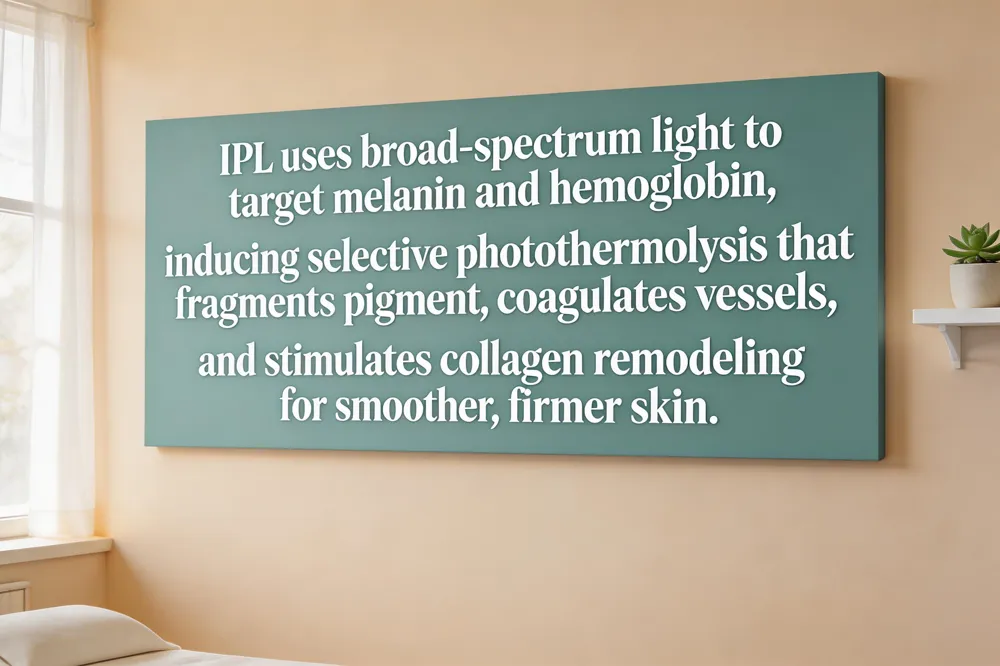 Intense Pulsed Light (IPL) delivers a broad‑spectrum of wavelengths, unlike single‑wavelength lasers that emit only one narrow band of light. This multi‑filter approach allows IPL to simultaneously target two key chromophores: melanin, the pigment responsible for age spots, freckles and sun‑damage, and hemoglobin, which makes up the blood vessels that cause redness and spider veins. When the light is absorbed, it converts to heat in a process called selective photothermolysis, fragmenting the pigment‑laden cells and coagulating superficial vessels so the body can naturally clear them. The same thermal energy also heats the dermal water content, stimulating fibroblasts to produce new collagen and elastin fibers. Over a series of treatments, this collagen remodeling smooths fine lines, refines pores and improves overall skin texture, giving the complexion a firmer, more even appearance. A typical IPL session lasts 20–30 minutes per treatment area, and patients describe the sensation as a quick rubber‑band snap or a mild warming feeling—comfortably tolerable and followed by only brief redness that subsides within a few hours.
How to Even Out Skin Tone with IPL on the Face
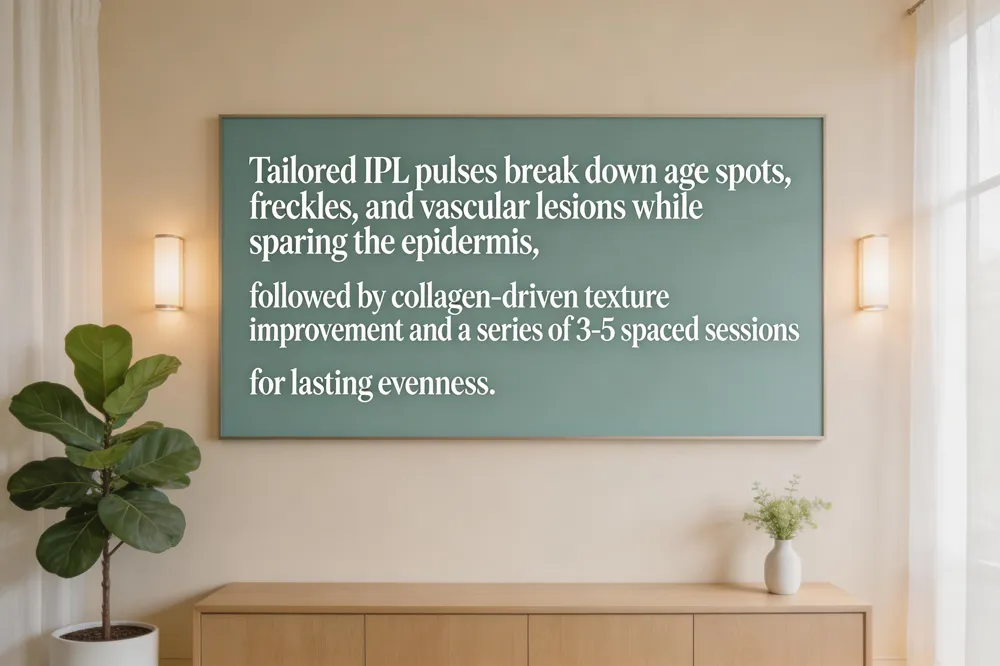 Begin with a professional consultation and skin assessment to identify pigment irregularities, redness, and vascular lesions. The clinician will tailor settings based on your Fitzpatrick skin type, ensuring safe and effective energy delivery. During the session, a hand‑held IPL device emits broad‑spectrum light pulses that are absorbed by excess melanin and hemoglobin. This selective photothermolysis breaks down age spots, freckles, and broken capillaries while leaving the epidermal surface intact. The heat also stimulates collagen production, which gradually smooths texture and firms the skin for a more uniform complexion. After treatment, most patients notice mild redness and a warm, sunburn‑like sensation that typically resolves within a few hours. Pigmented spots may temporarily darken—a “coffee‑ground” phase—before flaking off over the next 7‑10 days. Post‑procedure care emphasizes diligent sun protection (broad‑spectrum SPF 30+), gentle cleansing, and fragrance‑free moisturizers. A series of 3‑5 sessions spaced 3‑4 weeks apart yields the best long‑term results, with occasional maintenance visits to preserve an even skin tone.
What Your Skin Looks Like Immediately After IPL
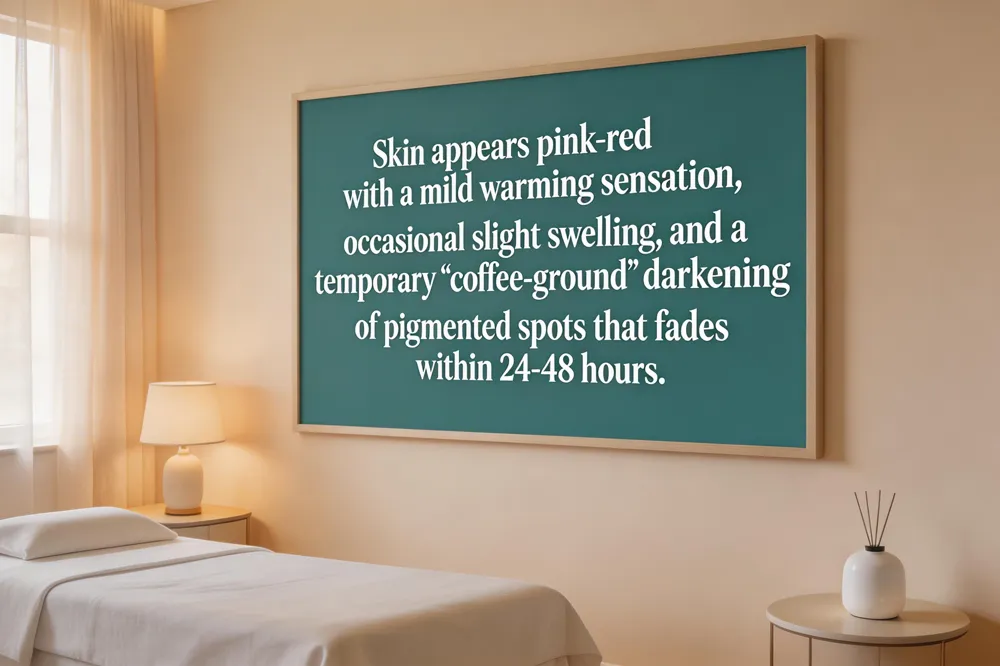 Immediately after an IPL photo‑facial your skin typically shows a pink‑to‑red hue that resembles a mild sunburn. This hue is accompanied by a light warmth or tingling sensation that usually subsides within a few hours. Many patients also notice a temporary darkening of existing brown spots, freckles, or age spots—often described as a “coffee‑ground” appearance which is a normal part of the pigment‑clearing process and will fade as the skin heals.
Slight swelling may be visible, particularly around the delicate eye area, but it is generally minimal and resolves quickly. The overall visual changes—redness, warmth and any darkened pigment—tend to diminish within 24‑48 hours, although a faint redness can linger for a few days before the skin returns to its normal tone. These short‑term effects are typical of IPL’s non‑ablative, non‑invasive nature and indicate the treatment’s work on melanin and hemoglobin beneath the surface.
Recovery Timeline and Speeding Up Healing
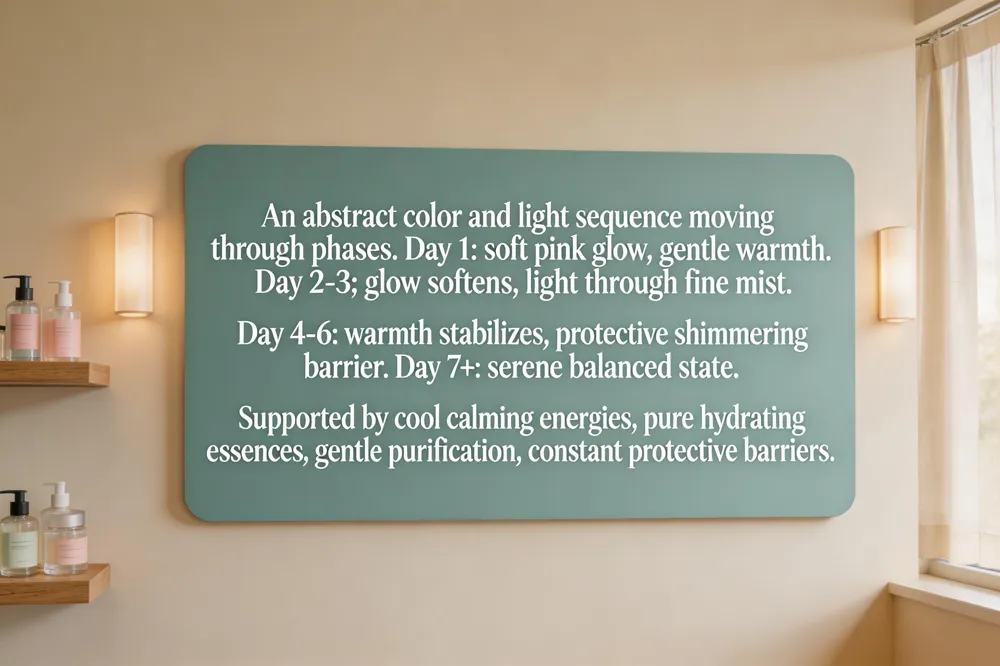 A typical IPL photofacial follows a predictable healing curve that most patients can map out day by day.
Day 1 – The skin looks pink‑red, feels like a mild sunburn, and may be slightly swollen. Pigmented spots often darken into a “coffee‑ground” appearance as the heat‑fragmented melanin settles beneath the surface.
Day 2‑3 – Redness begins to fade while the skin feels tight and dry. A fine, rough texture appears as the darkened particles start to flake off. Cool compresses (ice pack or cold, wet towel) for 15‑20 minutes, several times a day, help calm the heat and reduce swelling.
Day 4‑6 – Most swelling resolves. The skin continues to slough gently, revealing a more even tone. Light makeup can be applied, but a broad‑spectrum SPF 30+ sunscreen must be worn at all times.
Day 7 – The majority of redness and pigment crusting are gone. The complexion looks clearer and smoother, and normal skincare can be resumed, though sunscreen protection remains essential for the next weeks. Full recovery typically completes within 7‑10 days, with collagen‑driven improvements continuing for months.
How to speed healing – Keep the skin well‑hydrated with a fragrance‑free moisturizer applied several times daily. Use cool compresses immediately after treatment and continue for the first 48 hours. Stick to a gentle cleanser, avoid hot showers, saunas, vigorous exercise, and any harsh actives (retinoids, AHAs/BHAs, benzoyl peroxide) until the skin has fully healed. Protect the area with SPF 30+ sunscreen every morning and reapply frequently; stay out of direct sun for at least 4‑6 weeks. Support the skin’s repair processes with a balanced diet rich in antioxidants, plenty of water, and adequate sleep.
By following these steps, patients can minimize discomfort, reduce the risk of post‑procedure hyperpigmentation, and enjoy a smoother, more radiant complexion sooner.
Do’s, Don’ts, and the Best Moisturizer After IPL
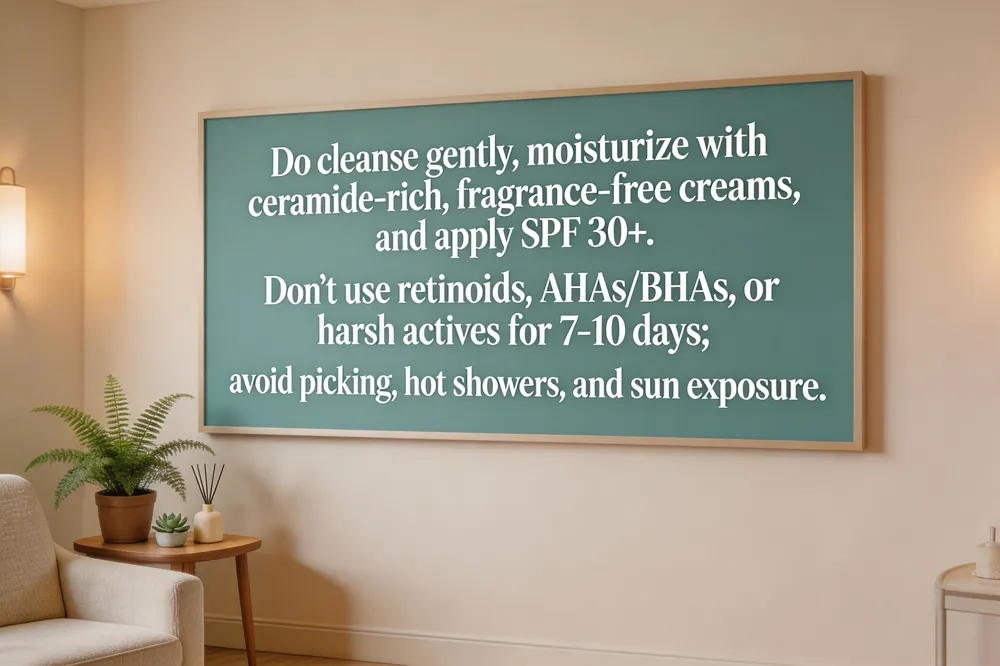 After an IPL photofacial keep the post‑procedure routine simple and soothing. Gentle cleansing routine – Use a fragrance‑free, mild cleanser (e.g., Cetaphil Gentle Skin Cleanser) and wash with lukewarm water; avoid scrubbing or harsh exfoliants. Hydration and barrier repair – Apply a fragrance‑free, barrier‑supporting moisturizer twice daily. Look for ceramides, hyaluronic acid, and centella asiatica to lock in moisture and calm inflammation. Products such as CeraVe Healing Ointment or La Roche‑Posay Toleriane Double Repair Face Moisturizer work well for most skin types. Sunscreen vigilance – Shield the treated area with a broad‑spectrum SPF 30+ sunscreen every morning and reapply every two hours when outdoors. Sun protection is crucial for at least two weeks to prevent rebound pigmentation. Products to avoid – Do not use retinoids, AHAs, BHAs, benzoyl peroxide, alcohol‑based toners, or any strong exfoliants for the first 7‑10 days; these can irritate the healing skin and disturb pigment clearance. Cold compresses and antihistamines – A brief cold compress (5‑10 minutes) can reduce redness and swelling; if itching or a mild allergic‑type reaction occurs, an oral antihistamine (e.g., diphenhydramine) may help.
Do and don’ts after IPL? Gently cleanse, moisturize, protect with sunscreen, stay hydrated, use cold compresses, and consider antihistamines as needed. Avoid touching, picking, or scrubbing the skin, and stay away from direct sun, tanning beds, hot showers, saunas, and vigorous exercise for the first 24‑48 hours.
Best moisturizer after IPL treatment – Choose a fragrance‑free, non‑comedogenic cream rich in ceramides, hyaluronic acid, and centella asiatica. Apply within the first hour post‑treatment and reapply throughout the day for the next 3‑5 days to support barrier repair and keep the skin supple.
Cost, Longevity, and Suitability of IPL for Uneven Skin Tone
 How much should an IPL treatment cost?
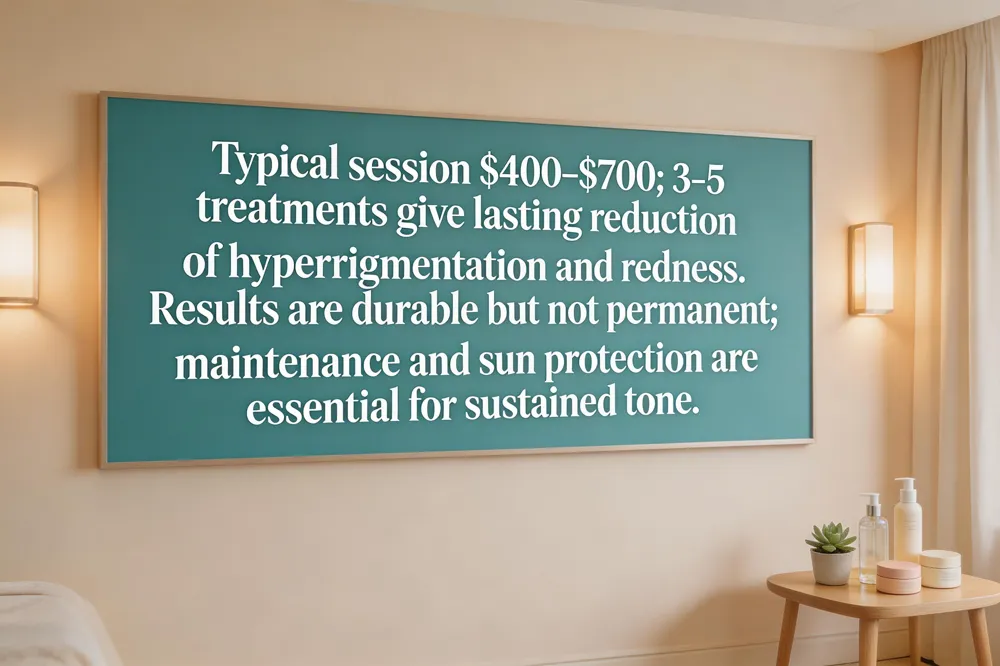
The price of an IPL (Intense Pulsed Light) session typically falls between $400 and $700. Smaller zones (under‑eye, lip) are at the low end, while full‑face or larger body areas approach the higher end. Costs vary by technology, clinic location (e.g., New Jersey metropolitan rates) and provider expertise. Package discounts or financing for multiple sessions can lower the per‑treatment price; a personalized quote is best obtained during a consultation.
How much should an IPL treatment cost?
The price of an IPL (Intense Pulsed Light) session typically falls between $400 and $700. Smaller zones (under‑eye, lip) are at the low end, while full‑face or larger body areas approach the higher end. Costs vary by technology, clinic location (e.g., New Jersey metropolitan rates) and provider expertise. Package discounts or financing for multiple sessions can lower the per‑treatment price; a personalized quote is best obtained during a consultation.
Is IPL good for uneven skin tone? Yes. IPL delivers broad‑spectrum light absorbed by melanin and hemoglobin, breaking down discoloration and stimulating collagen. Sun‑induced hyperpigmentation, redness, and blotchy areas improve in a single session, often visible after the first treatment. Optimal results usually require 3‑5 sessions spaced 3‑4 weeks apart, followed by occasional maintenance.
Can you permanently fix uneven skin tone? Results can be long‑lasting but not truly permanent, as skin continuously reacts to UV and lifestyle factors. IPL offers durable fading of dark spots and smoother texture, especially when combined with chemical peels, microneedling, or prescription serums. Consistent after‑care—broad‑spectrum SPF, antioxidant moisturizers, and periodic touch‑ups—helps maintain a stable, radiant complexion.
BBL laser in Salt Lake City BBL (BroadBand Light), a form of IPL, is offered at clinics such as Utah Facial Plastics and Forever Young BBL. Sessions last 30 minutes to two hours with minimal downtime; typical cost ranges $350‑$3,000 depending on area and package. A series of three monthly treatments is common for lasting improvement.
Can you get IPL if you use tretinoin? Stop retinoids (tretinoin, Differin, Tazorac, etc.) and other exfoliants at least one week before IPL. Shave the treatment area thoroughly; men should shave twice in succession for facial zones.
Your Path to Radiant, Even Skin with IPL
Intense Pulsed Light (IPL) photofacials deliver broad‑spectrum light that simultaneously targets melanin and hemoglobin, fading age spots, freckles, rosacea veins, and vascular lesions while stimulating collagen to smooth fine lines and improve texture. Because IPL is non‑ablative, the epidermis stays intact, so most patients notice only a mild, sun‑burn‑like redness that fades within a few hours to a day—allowing a quick return to work, makeup, and exercise. To ensure optimal results, Timeless Med Spa offers a personalized consultation where providers assess your Fitzpatrick skin type, discuss your specific concerns, and tailor filter settings and session spacing (typically 3‑5 treatments four weeks apart). After each visit, diligent after‑care—gentle cleansing, fragrance‑free moisturizers, and broad‑spectrum SPF 30+ sunscreen—protects the newly rejuvenated skin and prevents new pigment formation. Embrace a customized, natural‑looking glow with IPL and the expertise of Timeless Med Spa.