Understanding Light‑Based Skin Therapies
Intense Pulsed Light (IPL) and laser treatments both rely on light energy to improve skin concerns, but they differ in the way the light is delivered. IPL emits a broad spectrum of wavelengths in rapid flashes; the practitioner can adjust fluence, pulse duration and filters to target multiple chromophores (melanin, hemoglobin) across a larger treatment area. This makes IPL versatile for superficial issues such as sun‑spots, rosacea, freckles and mild texture irregularities, with minimal downtime and lower per‑session cost. In contrast, laser devices generate a single, highly focused wavelength that concentrates energy into a narrow beam. The precision allows deeper penetration and higher fluence, making lasers ideal for deeper pigmentation, vascular lesions, scar remodeling and collagen‑stimulating resurfacing (ablative or fractional). Both modalities convert light to heat, breaking down unwanted pigment and triggering new collagen growth, but the choice between them depends on treatment depth, skin type, desired recovery time and budget.
IPL vs Laser for Rosacea
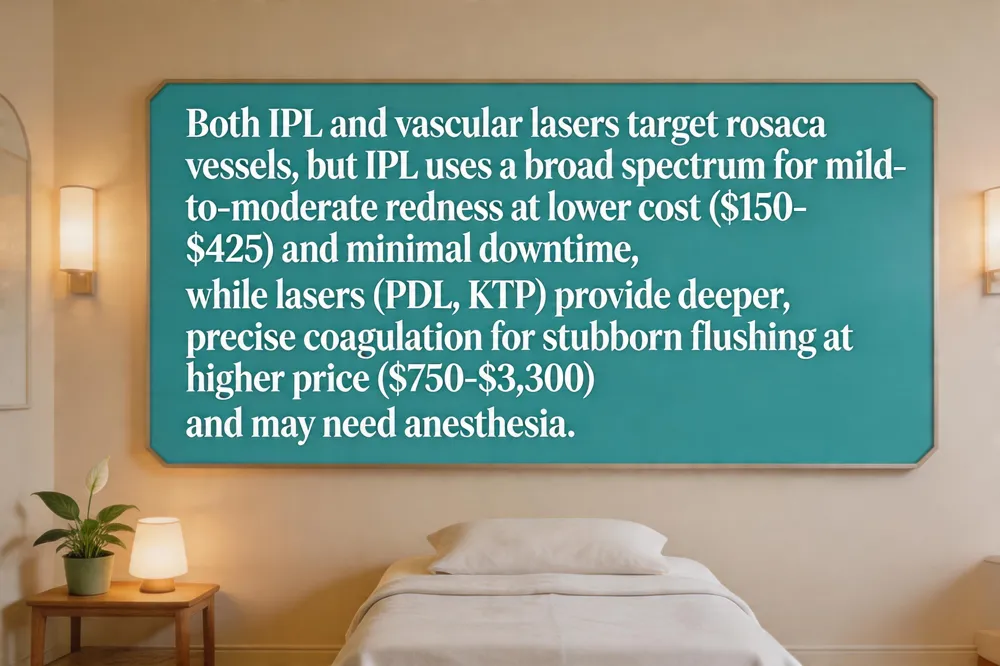 Rosacea is primarily a vascular condition, so both IPL and vascular lasers target enlarged blood vessels, but they differ in depth, precision, and price. IPL delivers a broad spectrum of light filtered to hemoglobin; its energy spreads over a larger area, making it ideal for mild‑to‑moderate redness with minimal downtime and a lower per‑session cost ($150‑$425). The treatment is non‑ablative, affecting only superficial vessels, so several sessions (usually 4‑6) are needed for lasting improvement. Vascular lasers such as pulsed‑dye or KTP emit a single, focused wavelength that penetrates deeper and coagulates vessels more precisely, delivering stronger results for persistent flushing or telangiectasia. However, laser sessions are more expensive ($750‑$3,300 for CO₂ resurfacing , lower for PDL) and may require topical anesthesia. In practice, clinicians often start with IPL for early rosacea and reserve laser therapy for patients who need deeper, targeted vascular reduction.
Age Considerations: Laser Resurfacing at 70
 Being 70 years old does not automatically disqualify you from CO₂ laser resurfacing. Senior skin can still benefit from the collagen‑stimulating effects of ablative lasers, especially when the epidermis is healthy and the patient follows a thorough pre‑treatment plan.
• Senior skin health – Older skin often has reduced elasticity and a longer turnover rate, but fractional CO₂ lasers (such as the Lumenis AcuPulse) can safely target fine lines, sun‑damaged spots, and texture changes without over‑aggressively stripping the surface.
• Healing time – Recovery may be slightly slower in patients 70+. Expect 1‑2 weeks of mild redness, flaking, and gentle care, but fractional settings minimize downtime compared with traditional ablative CO₂ procedures.
• Safety – Provider expertise is critical; board‑certified cosmetic surgeons assess medical history, Fitzpatrick skin type, and any contraindications (e.g., uncontrolled diabetes, recent isotretinoin). With proper cooling, calibrated fluence, and post‑care sunscreen, complications remain low.
In short, with realistic expectations, good overall health, and an experienced clinician, laser resurfacing can be a safe, effective rejuvenation option for the 70‑year‑old patient.
Non‑Invasive Laser vs IPL for Facial Rejuvenation
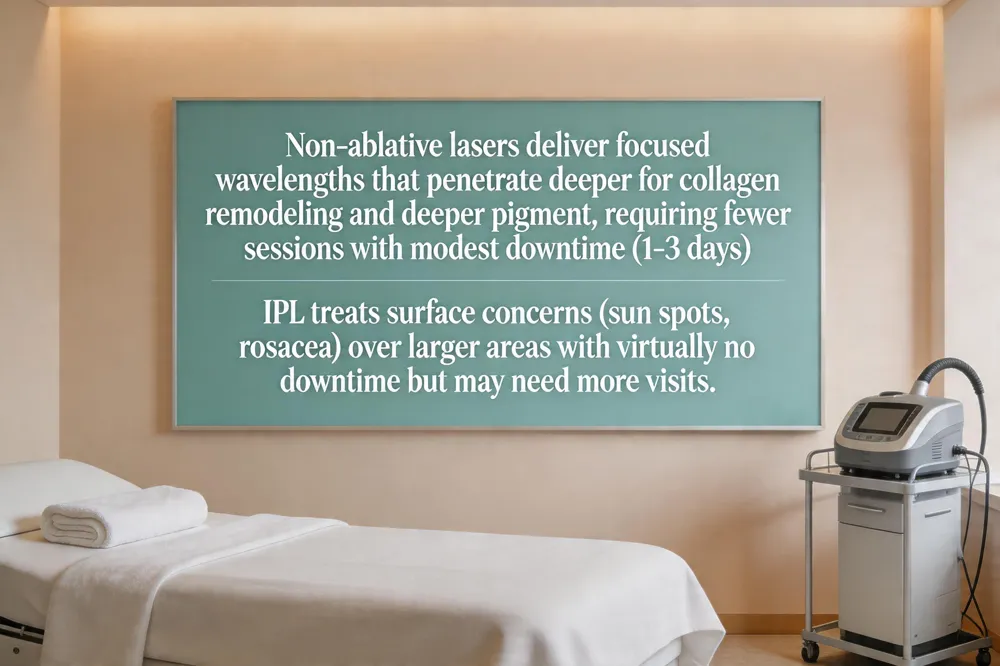 When choosing a facial rejuvenation plan, many patients wonder whether a non‑ablative laser or Intense Pulsed Light (IPL) will deliver the best results. Non‑ablative lasers emit a single, focused wavelength that penetrates deeper into the dermis, prompting collagen synthesis and improving texture, fine lines, and deeper pigment or scar tissue. The energy is concentrated, so a few sessions often yield noticeable remodeling, though a modest downtime of 1‑3 days for redness and mild swelling is typical. IPL, by contrast, delivers a broad spectrum of light pulses that can be filtered to treat multiple chromophores at once. This makes IPL ideal for surface‑level concerns—sun spots, rosacea, mild acne, and overall tone unevenness—while covering larger areas quickly and with virtually no downtime. Because IPL’s energy is less intense, recovery is faster and the per‑session cost is lower, but more treatments may be needed to match the depth of laser‑induced collagen changes. In practice, many clinics blend both modalities: IPL for brightening and vascular control, followed by a non‑ablative laser to target deeper collagen remodeling, achieving comprehensive rejuvenation with minimal interruption to daily life.
Safety Profile: IPL vs Laser
 Which is safer IPL or laser treatment?
IPL is generally considered safer than laser treatment because its broader‑spectrum light is less concentrated, resulting in a lower risk of burns, hyper‑ or hypo‑pigmentation, and other complications. The gentler energy also leads to quicker recovery and less downtime for most patients. However, IPL’s safety advantage diminishes on darker skin tones, where the light can be over‑absorbed and cause discoloration. Laser devices, with their single‑wavelength, high‑energy beams, are more precise for deep pigmentation or scarring but carry a higher chance of adverse effects if not properly calibrated. Ultimately, a qualified provider will assess your skin type and treatment goals to determine which modality offers the safest outcome for you.
Cost Comparison
 When weighing non‑invasive laser treatments against IPL, cost is a key consideration. IPL sessions are typically priced between $150 and $425 per treatment, reflecting the broader‑spectrum light technology, larger spot sizes and quicker recovery time. Non‑invasive laser procedures—such as fractional 1550 nm or Nd:YAG lasers—generally run $250‑$500 per session, with high‑end fractional resurfacing lasers reaching $600‑$800. The higher per‑visit price of lasers stems from the need for Laser devices emit a single, focused wavelength that deliver deeper collagen stimulation and often require fewer overall sessions to achieve lasting results. For example, a patient may need 4‑6 IPL visits versus 3‑5 laser appointments, potentially balancing the expense. Ultimately, the exact cost varies by Provider expertise critical for outcomes, equipment, and individualized treatment plans, so a personalized consultation at a reputable med spa is essential to determine the best value for your skin goals.
Additional Frequently Asked Questions
 Laser vs. IPL for pigmentation – Both modalities target hyperpigmentation, but they work differently. IPL uses a broad spectrum of wavelengths to treat larger surface areas gently, ideal for mild‑to‑moderate sun spots, freckles, and overall tone‑evening with minimal downtime. Specific lasers (e.g., Q‑switched Nd:YAG, fractional lasers) deliver a single, concentrated wavelength that penetrates deeper, offering faster results for stubborn, deep‑lying pigment and precise targeting of isolated lesions. IPL usually requires more sessions; laser may achieve comparable improvement in fewer treatments but can involve more redness and longer recovery.
IPL vs. laser for hair removal – Laser hair removal employs a monochromatic, high‑energy beam tuned to melanin, providing concentrated heat to the follicle. It yields faster, long‑term reduction—typically 3‑4 sessions—for dark or black hair and works on a wider range of skin tones. IPL uses a broadband, diffused pulse covering many wavelengths, effective for light‑to‑medium skin with dark or light‑brown hair but needing 4‑6+ sessions. IPL is generally less painful; laser may feel stronger but cooling systems mitigate discomfort.
Difference between IPL and laser for the face – IPL flashes broad‑spectrum light to treat surface‑level concerns (sun spots, rosacea, mild acne) over a larger area quickly, with low cost and minimal downtime. Laser devices emit a single, focused wavelength for deeper, precise correction of deep pigment, scar tissue, or severe wrinkles, often as ablative or non‑ablative fractional types. IPL is gentler and cheaper per session but may need more visits, while laser delivers stronger, more predictable outcomes for deeper issues.
Non‑invasive laser vs. IPL vs. microneedling – Non‑invasive lasers reach deeper dermal layers to remodel collagen, suitable for deeper wrinkles and scar tissue with short recovery. IPL targets pigment and superficial vessels, excellent for sun damage and mild texture issues with minimal downtime. Microneedling creates controlled micro‑injuries that trigger natural collagen production, effective for fine lines, acne scarring, and pore size across all skin types. Many patients combine treatments—IPL for discoloration, followed by microneedling for texture—to maximize results.
Laser vs. IPL for wrinkles – Non‑ablative fractional lasers deliver deeper, focused energy that stimulates robust collagen remodeling, typically yielding greater wrinkle reduction in fewer sessions. IPL improves surface texture and tone but is less potent for deep wrinkles; it often requires a series of treatments and offers only mild redness with quick recovery.
Reddit insights – Users often praise IPL for its versatility, lower cost, and quick sessions, while many favor laser for its precision, faster results on deep scars, and stronger hair‑removal performance. Forums note non‑invasive lasers receive compliments for deeper skin tightening with minimal redness, whereas IPL is lauded for broad‑area treatment and minimal downtime.
Before‑and‑after IPL results – Pre‑treatment skin may show brown spots, rosacea redness, and uneven tone. After IPL, patients typically experience a brief sun‑burn‑like redness that fades within days, followed by smoother, brighter, more evenly toned skin with reduced discoloration and fine lines. Consistent sunscreen and proper after‑care are essential to maintain long‑term benefits.
Choosing the Right Light‑Based Solution
Before any IPL or laser session, a thorough skin assessment is essential. The clinician evaluates Fitzpatrick type, pigment depth, vascular lesions and any history of photosensitivity or scarring. This personalized analysis determines whether a broad‑spectrum IPL device—ideal for superficial sunspots, rosacea and mild redness—or a single‑wavelength laser, such as Nd:YAG for deeper pigment or fractional CO₂ for resurfacing, will be safest and most effective. Equally important is the provider’s expertise; board‑certified cosmetic surgeons and experienced laser‑technicians know how to adjust fluence, pulse duration and cooling to match each patient’s skin and reduce complications. Finally, patients should balance expected results with downtime and cost. IPL typically costs $150‑$425 per session, offers minimal recovery and may need 4‑6 visits, while laser treatments range $750‑$3,300, deliver longer‑lasting improvement but often require more downtime and fewer sessions. A thoughtful consultation aligns goals, budget and lifestyle for natural‑looking outcomes.