Why Pre‑Treatment Safety Matters
Dermal fillers can restore volume, smooth wrinkles, and enhance facial contours, but they also carry risks such as bruising, swelling, infection, or, in rare cases, vascular occlusion. To maximize benefits and minimize complications, patients should disclose their full medical history, including allergies, medications, and prior cosmetic procedures, and choose a board‑certified practitioner with expertise in facial anatomy. Preparing the skin and body—staying well‑hydrated, avoiding blood‑thinners, NSAIDs, alcohol, and harsh skincare products for several days, and pausing herbal supplements that increase bruising risk—helps the filler integrate smoothly. Following pre‑treatment guidelines and after‑care instructions, such as cold compresses, limited exercise, and head elevation, ensures a comfortable, complication‑free experience and the most natural‑looking results.
Pre‑Appointment Preparation: What to Do and What to Avoid
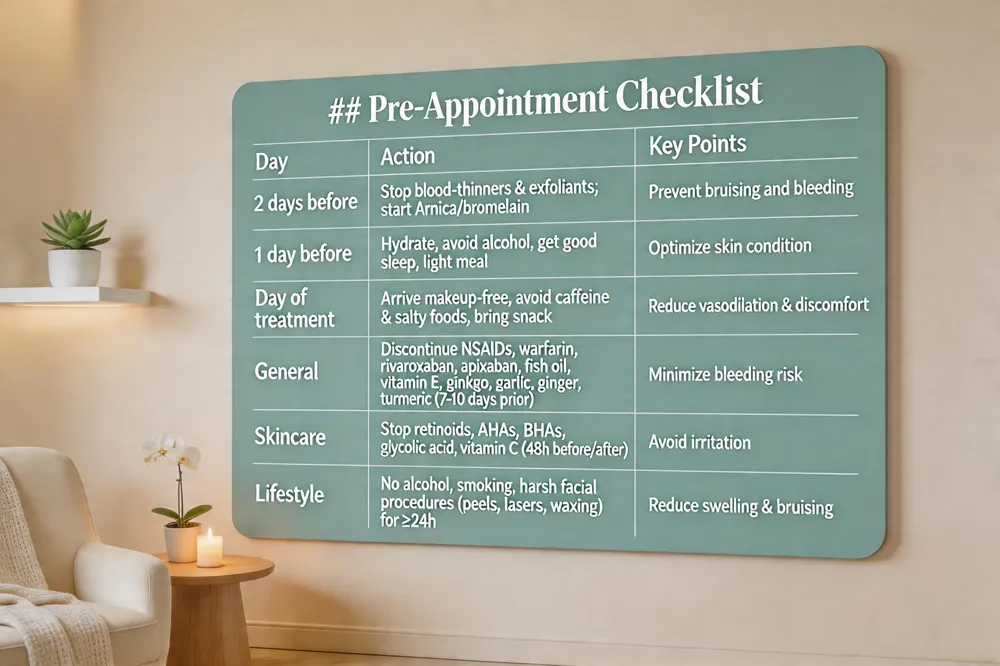
Pre‑Appointment Checklist (Markdown Table)
| Day | Action | Key Points |
|---|---|---|
| 2 days before | Stop blood‑thinners & exfoliants; start Arnica/bromelain if needed | Prevent bruising and bleeding |
| 1 day before | Hydrate, avoid alcohol, get good sleep, light meal | Optimize skin condition |
| Day of treatment | Arrive makeup‑free, avoid caffeine & salty foods, bring snack | Reduce vasodilation & discomfort |
| General | Discontinue NSAIDs, warfarin, rivaroxaban, apixaban, fish oil, vitamin E, ginkgo, garlic, ginger, turmeric (7‑10 days prior) | Minimize bleeding risk |
| Skincare | Stop retinoids, AHAs, BHAs, glycolic acid, vitamin C (48 h before/after) | Avoid irritation |
| Lifestyle | No alcohol, smoking, harsh facial procedures (peels, lasers, waxing) for ≥24 h | Reduce swelling & bruising |
 Before you sit down for dermal filler injections, a thorough pre‑appointment checklist helps ensure safety, minimize bruising, and set realistic expectations.
Scheduling your appointment – Book your filler session at least 1–2 weeks (ideally 4 weeks) before any major event so swelling and bruising have time to subside. Choose a time toward the end of the week to allow recovery before work or social obligations.
Managing medications and supplements – Discontinue blood‑thinners (warfarin, rivaroxaban, apixaban) and over‑the‑counter NSAIDs (aspirin, ibuprofen, naproxen) at least 7–10 days prior. Stop herbal or vitamin supplements that increase bleeding risk—fish oil, omega‑3s, vitamin E, ginkgo biloba, garlic, ginger, turmeric, St. John’s Wort—also 7–10 days before. If you need pain relief, use acetaminophen instead of NSAIDs.
Adjusting skincare and lifestyle habits – Cease retinoids, AHAs, BHAs, glycolic acid, and vitamin C products 48 hours before and after treatment. Stay well‑hydrated, avoid alcohol and smoking for at least 24 hours, and skip harsh facial procedures (peels, lasers, waxing) for a week. If you’re prone to cold sores, discuss antiviral prophylaxis.
Day‑by‑day checklist
- Two days before: Stop blood‑thinners and exfoliants; begin Arnica or bromelain if bruising is a concern.
- One day prior: Hydrate, avoid alcohol, get adequate sleep, and eat a light meal.
- Day of treatment: Arrive with a clean, makeup‑free face; avoid caffeine and heavy salty foods; bring a light snack if needed.
What not to do – Do not drink alcohol, smoke, or consume excessive caffeine within 24 hours of the appointment. Avoid any active skin infection, recent dental work, or other invasive facial procedures. Do not take blood‑thinning agents or harsh anti‑aging topicals the day of treatment.
Can I drink coffee before lip filler? – A small sip is unlikely to harm results, but most practitioners recommend skipping caffeine on the day of the appointment (and ideally the prior 24 hours) to reduce blood flow and bruising risk.
Follow these steps, keep your provider informed, and you’ll set the stage for a smooth, natural‑looking filler experience.
Medication, Supplements & Post‑Injection Medications
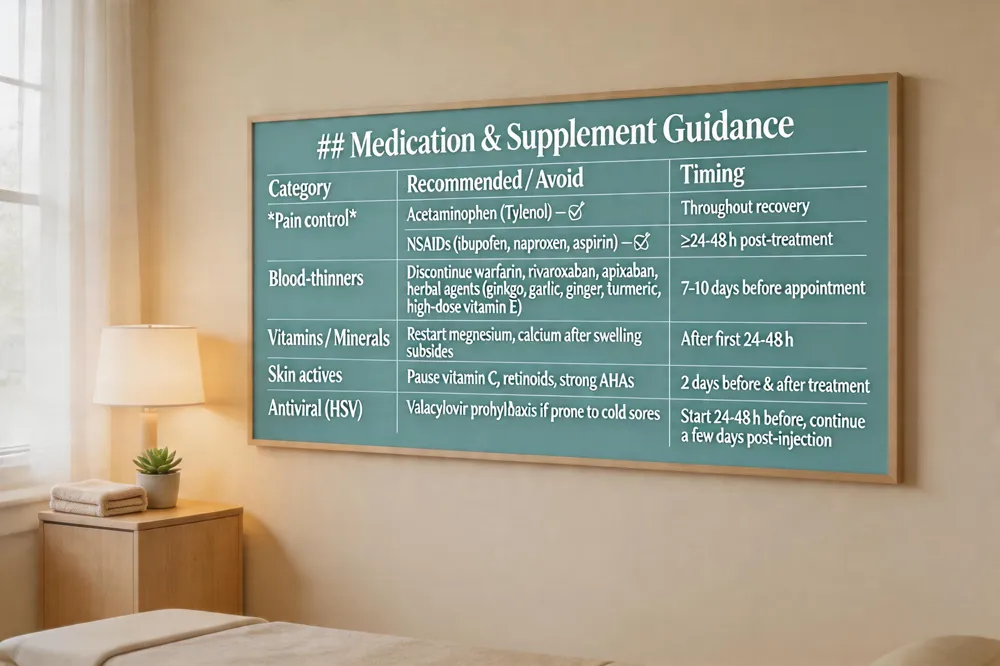
Medication & Supplement Guidance (Markdown Table)
| Category | Recommended / Avoid | Timing |
|---|---|---|
| Pain control | Acetaminophen (Tylenol) – ✅ | Throughout recovery |
| NSAIDs (ibuprofen, naproxen, aspirin) – ❌ | ≥24‑48 h post‑treatment | |
| Blood‑thinners | Discontinue warfarin, rivaroxaban, apixaban, herbal agents (ginkgo, garlic, ginger, turmeric, high‑dose vitamin E) | 7‑10 days before appointment |
| Vitamins / Minerals | Restart magnesium, calcium after swelling subsides | After first 24‑48 h |
| Skin actives | Pause vitamin C, retinoids, strong AHAs | 2 days before & after treatment |
| Antiviral (HSV) | Valacyclovir prophylaxis if prone to cold sores | Start 24‑48 h before, continue a few days post‑injection |
 A smooth recovery after dermal fillers hinges on right medication choices and mindful supplementation.
Pain control options – Acetaminophen (Tylenol) is the preferred analgesic; it relieves discomfort without affecting platelet function. NSAIDs such as ibuprofen, naproxen and aspirin should be avoided for at least 24‑48 hours after treatment because they thin the blood and amplify bruising.
Blood‑thinning agents – Discontinue prescription anticoagulants and over‑the‑counter blood thinners (e.g., warfarin, rivaroxaban, ibuprofen, aspirin) a week before the appointment, as advised by your provider. This also includes herbal supplements like ginkgo biloba, garlic, ginger, turmeric and high‑dose vitamin E, which can increase bleeding risk.
Mineral and vitamin considerations – Restart magnesium, calcium or other mineral supplements only after the first 24‑48 hours, preferably once any swelling has settled. Vitamin C, retinoids and strong AHAs should be paused two days before and after the procedure to prevent skin irritation.
Cold‑sore and antiviral protocols – If you have a history of HSV‑1/HSV‑2, especially with lip fillers, discuss antiviral prophylaxis (e.g., valacyclovir) with your injector; start the medication 24‑48 hours before and continue for a few days post‑injection.
Post‑filler checklist – Apply cold compresses for 10‑minutes on‑off during the first 24‑48 hours, keep the area clean, stay hydrated, and avoid alcohol, smoking, intense heat, vigorous exercise, and any facial massage or makeup for at least a day. Promptly contact your clinic if you notice severe pain, rapid discoloration, or vision changes.
Choosing a Provider, Procedure Length, Pain Areas & FDA Guidance
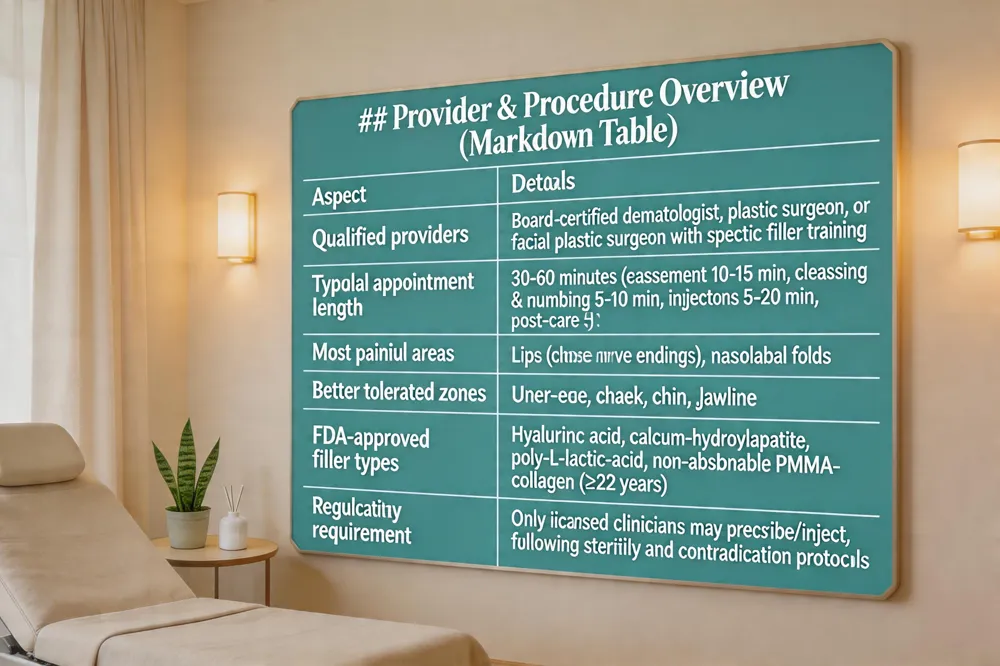
Provider & Procedure Overview (Markdown Table)
| Aspect | Details |
|---|---|
| Qualified providers | Board‑certified dermatologist, plastic surgeon, or facial plastic surgeon with specific filler training |
| Typical appointment length | 30‑60 minutes (assessment 10‑15 min, cleansing & numbing 5‑10 min, injections 5‑20 min, post‑care 5‑10 min) |
| Most painful areas | Lips (dense nerve endings), nasolabial folds |
| Better tolerated zones | Under‑eye, cheek, chin, jawline (thicker skin, fewer sensory fibers) |
| FDA‑approved filler types | Hyaluronic acid, calcium‑hydroxylapatite, poly‑L‑lactic‑acid, non‑absorbable PMMA‑collagen (≥22 years) |
| Regulatory requirement | Only licensed clinicians may prescribe/inject, following sterility and contraindication protocols |
 A successful filler experience starts with a qualified injector. Choose a board‑certified dermatologist, plastic surgeon, or facial plastic surgeon who has specific training in facial anatomy and FDA‑approved dermal fillers. During the initial consultation the provider will review your full medical history, discuss aesthetic goals, and map out the injection sites.
A typical dermal filler appointment lasts 30‑60 minutes. The first 10‑15 minutes are devoted to a brief facial assessment and discussion of product options. Skin cleansing and any numbing (topical or lidocaine‑containing filler) take another 5‑10 minutes. The actual injections are quick—often 5‑20 minutes depending on the number of zones—and the final 5‑10 minutes are used for gentle massage, if needed, and to provide post‑procedure instructions.
The lips are generally the most painful area because they contain dense nerve endings and thin skin; nasolabial folds follow closely. Under‑eye (tear‑trough), cheek, chin, and jawline injections are usually better tolerated due to thicker skin and fewer sensory fibers.
The U.S. FDA classifies dermal fillers as medical devices and has approved hyaluronic‑acid, calcium‑hydroxylapatite, poly‑L‑lactic‑acid, and one non‑absorbable PMMA‑collagen product for adults 22 years and older. Only licensed, experienced clinicians may prescribe and inject these products, following strict sterility, labeling, and contraindication protocols to ensure safety and optimal, results.
Post‑Procedure Care, Recovery & Emerging Trends
Post‑Procedure Care & Trends (Markdown Table)
| Care Action | Duration / Notes |
|---|---|
| Cold compress | 10‑15 min on‑off, hourly for first 12 h |
| Head elevation | Keep elevated while sleeping for 24‑48 h |
| Exercise & heat | Avoid strenuous activity, hot tubs, saunas, hot environments for 24‑48 h |
| Substance avoidance | No alcohol, smoking, caffeine (optional) for 24‑48 h |
| Skin handling | No touching, massage, makeup, or creams on injection sites until next day |
| Bruising aid | Arnica supplement/cream as directed |
| Pain relief | Acetaminophen preferred; avoid NSAIDs/aspirin |
| Emerging trend | Shift toward skin‑health treatments (laser resurfacing, chemical peels, microneedling) for natural results |
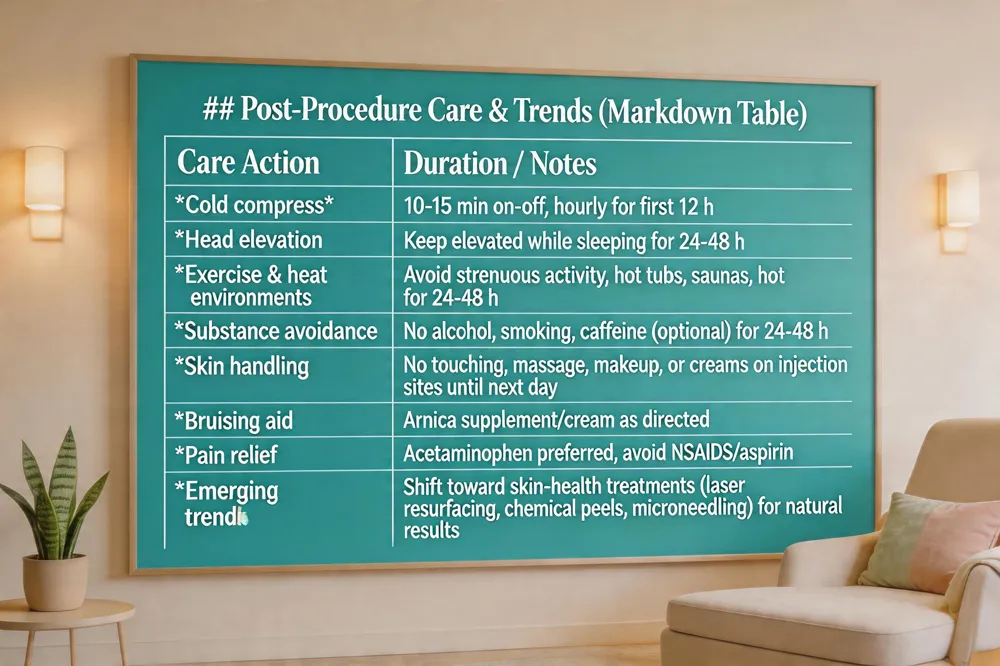 After a dermal filler session, start a standard aftercare routine: apply cold compresses for 10‑15 minutes each hour during the first 12 hours, keep the head elevated, and avoid lying on the side or stomach. Refrain from strenuous exercise, hot tubs, saunas, alcohol, and smoking for at least 24‑48 hours. Do not touch, massage, or apply skincare, makeup, or creams to the injection sites until the next day; avoiding touching the treated area and wash only with mild soap and water. For bruising, an arnica supplement or cream can be used as directed, and acetaminophen is preferred for mild tenderness—avoid NSAIDs and aspirin.
Lifestyle adjustments during healing include staying well‑hydrated, eating a light balanced meal, and skipping harsh exfoliants or aggressive facials for 24‑48 hours. Elevating the head while sleeping and avoiding excessive heat exposure further reduces swelling.
Patient concerns about filler safety often center on over‑filling, allergic reactions, and rare vascular complications. Choosing a board‑certified practitioner, disclosing a full medical history, and using FDA‑approved hyaluronic‑acid products mitigate these risks. Because HA fillers are reversible with hyaluronidase, most unwanted outcomes can be corrected promptly.
Why are some patients shifting away from injectables? Many now prefer skin‑health‑focused treatments—such as laser resurfacing, chemical peels, or microneedling—that enhance natural texture without adding volume. This trend reflects a desire for subtle, natural results, reduced needle anxiety, and avoidance of potential filler‑related complications. While fillers remain safe and effective when performed correctly, the growing emphasis on holistic skin rejuvenation is reshaping patient preferences.
Cost, Volume Decisions & Safety Comparisons
Cost & Safety Comparison (Markdown Table)
| Product/Area | Approx. Cost per Syringe | Typical Volume Needed | Safety Notes |
|---|---|---|---|
| Lips (HA) | $700 | 1‑2 ml | Mild bruising, swelling; reversible with hyaluronidase |
| Under‑eye / temples | $800 | 0.5‑1 ml per side | Higher sensitivity, monitor for swelling |
| Cheeks (moderate) | $700‑$800 | 1‑2 ml per side (2 syringes total) | Natural volume restoration |
| Multi‑syringe package (e.g., Beyond Mini Lift) | $2,100 for 3 syringes | Varies by facial zones | Cost‑effective for broader treatment |
| Full‑face balance (5‑8 syringes) | $3,600+ | Customized per area | Comprehensive rejuvenation |
| Juvéderm vs. Restylane | Similar pricing | Comparable ml per syringe | Both FDA‑approved HA fillers; safety depends on injector skill |
| Neck filler | $700‑$800 per syringe | 0.5‑1 ml | Safe when performed by board‑certified clinician; watch for nerve or vascular complications |
 When planning a dermal filler session, understanding pricing, syringe volume, and safety helps you set realistic expectations. At Timeless Med Spa in Berlin, NJ, hyaluronic‑acid fillers start around $700 per syringe for common areas such as lips, and can rise to $800 for more delicate zones like the under‑eye or temples. Multi‑syringe packages—e.g., a three‑syringe “Beyond Mini Lift”—run about $2,100, while a full‑face balance with five to eight syringes may exceed $3,600. The exact cost varies by brand (Juvéderm, Restylane, RHA, Versa) and the number of syringes needed for each treatment area.
Two syringes in the cheeks is generally within the normal range; most clinicians use 1‑3 ml per side (≈1‑3 syringes), so a total of two syringes provides moderate volume restoration without looking over‑filled.
Both Juvéderm and Restylane are FDA‑approved HA fillers with comparable safety profiles—temporary redness, swelling, bruising, or tenderness that resolve in days. Neither product is markedly safer than the other; the injector’s skill is the key factor.
Neck filler can be safe when performed by a board‑certified practitioner who respects anatomy and uses HA products. Risks such as nerve irritation or vascular occlusion are rare but possible if placement is incorrect. A thorough consultation mitigates these dangers.
When administered correctly, fillers enhance natural features without compromising facial harmony. Over‑use or poor placement can lead to unevenness or a “frozen” look, but hyaluronic‑acid fillers are reversible with hyaluronidase, allowing prompt correction of most unwanted outcomes.
Final Checklist Recap
Your pre‑treatment checklist is simple yet essential. First, choose a board‑certified injector and disclose every medication, supplement, allergy and past cosmetic procedure. Stop blood‑thinners, NSAIDs, vitamin E, fish oil, garlic, ginkgo and other bruising‑prone supplements at least seven days before, and avoid alcohol, smoking and harsh acticals for 48 hours. Stay hydrated, eat a light meal, and arrive with clean, makeup‑free skin. After the injection, apply cold compresses, keep your head elevated, and skip vigorous exercise, saunas and heavy facial massage for the first 24‑48 hours. At Timeless Med Spa, schedule your follow‑up within two weeks, discuss any cold‑sore history for antiviral prophylaxis, and review personalized after‑care instructions. By following these steps you minimize bruising, protect vascular health, and enjoy natural, lasting results.