Understanding Sequential Skin Rejuvenation
Sequential skin rejuvenation refers to a planned series of complementary, minimally invasive procedures—such as IPL, non‑ablative fractionated laser (NAFL), microneedling, or radiofrequency—performed at 4‑6‑week intervals. Each session builds on the previous one, allowing the skin’s natural repair mechanisms to remodel collagen, elastin, and extracellular matrix without overwhelming the epidermis. IPL first targets vascular and pigment lesions, while NAFL creates microscopic thermal zones that stimulate neocollagenesis; microneedling adds micro‑injuries that further amplify fibroblast activity, and RF energy deepens the tightening effect. Because the modalities act on different skin layers, their sequential use produces synergistic improvements in wrinkles, texture, tone, and brightness. Patients can expect a gradual, natural‑looking enhancement: mild redness lasting 1‑2 days, tolerable pain (VAS ≤4.4), and measurable gains in skin firmness and clarity as early as one month, with continued benefits through six months. High satisfaction rates (65‑70 % rating outcomes “good” or “very good”) accompany the minimal downtime and need for diligent sun protection and moisturization between visits.
Synergistic Power of Same‑Day IPL and NAFL
| Outcome | % of Patients | Timepoint | Notes |
|---|---|---|---|
| ≥1‑point improvement in Fitzpatrick Wrinkle & Elastosis Scale | 59% | 1‑month, sustained at 6 months (P < 0.001) | Same‑day IPL → NAFL sequential protocol |
| Pigmentation brightening | 63‑69% | 1‑month | IPL pigment‑clearing effect |
| Texture, brightness & tightness improvement | ≥80% | 1‑month | NAFL micro‑thermal zones stimulate neocollagenesis |
| Mean social downtime | 1.5 ± 0.25 days | per combined session | Comparable to each modality alone |
| Pain (VAS) | ≤4.4/10 | per session | Tolerable |
| Adverse events (mild/transient) | – | – | Pruritus, pinpoint bleeding, brief redness, 1 HSV case |
| Overall patient satisfaction | >90% “improved” to “much improved” | 6‑month follow‑up | 65‑70% report “good” or “very good” |
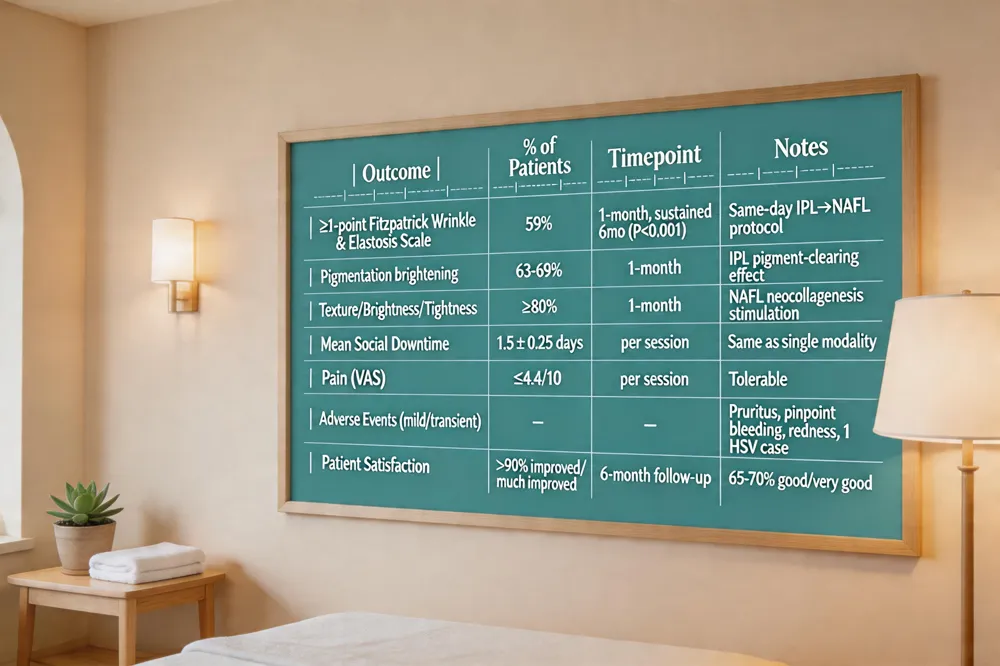 Clinical efficacy: A prospective multicenter study of 33 patients (Fitzpatrick II–IV, mean age 46) showed that same‑day sequential intense pulsed light (IPL) followed by non‑ablative fractionated laser (NAFL) produced a ≥1‑point improvement in Fitzpatrick Wrinkle and Elastosis Scale for 59 % of participants at 1‑month, sustained through 6 months (P < 0.001). Pigmentation brightened in [63‑69 %] and texture, brightness, and tightness improved in [≥80 %] of patients.
Collagen remodeling: IPL targets vascular and pigment lesions, while NAFL creates microscopic thermal zones that trigger neocollagenesis. The combined regimen leverages IPL’s pigment‑clearing effect and NAFL’s collagen‑stimulating micro‑injuries, resulting in synergistic rejuvenation of wrinkles, tone, and elasticity.
Downtime: Mean social downtime per combined session was only 1.5 ± 0.25 days, comparable to each modality alone. Pain scores remained tolerable (VAS ≤4.4/10). Adverse events were mild and transient (pruritus, pinpoint bleeding, brief redness, one herpes simplex case) and resolved without lasting effects.
Patient satisfaction: Over 90 % reported overall appearance as “improved” to “much improved.” Satisfaction ratings of “good” or “very good” were recorded by 65‑70 % at the 6‑month follow‑up, reflecting high tolerance and perceived benefit.
Best skin rejuvenation sessions: The most effective protocol pairs a non‑ablative laser or IPL to stimulate collagen and address discoloration, followed by microneedling or NAFL to deepen remodeling and improve texture. For deeper lines, fractional CO₂ or Fraxel® DUAL resurfacing can be added, while targeted anti‑wrinkle injections and hyaluronic‑acid fillers provide instant lift and volume. A personalized schedule every 4‑6 months, tailored to skin type and concerns, yields natural‑looking, long‑lasting results.
Skin rejuvenation session reviews: Clients consistently praise staff professionalism, meticulous technique, and comforting bedside manner. Reviews highlight noticeable improvements after Halo, BBL, IPL, and filler treatments—reduced redness, smoother texture, and a youthful “like‑myself‑but‑younger” appearance. The welcoming environment and attentive follow‑up further enhance overall satisfaction, driving high return rates for future sessions.
Timeless Med Spa: Personalized Rejuvenation Near You
| Service | Price (per session) | Typical Downtime | Pain (VAS) | Key Benefits |
|---|---|---|---|---|
| IPL‑NAFL combo | $350 | ~1.5 days | ≤4.4/10 | ≥1‑point wrinkle improvement for 59% of patients, 6‑month durability |
| RF microneedling (Morpheus8) | $300 | ~1‑2 days | ≤4.4/10 | Deep collagen remodeling, tightening |
| Membership – Silver | $150/mo | – | – | Product discounts, reduced Botox fees |
| Membership – Gold | $199/mo | – | – | Higher discounts, priority scheduling |
| Botox (dynamic lines) | $12‑$15 per unit | <24 h | ≤3/10 | Immediate reduction of fine lines |
| Dermal fillers (volume) | $600‑$800 per syringe | 1‑2 days | ≤4/10 | Restores lost volume, lifts skin |
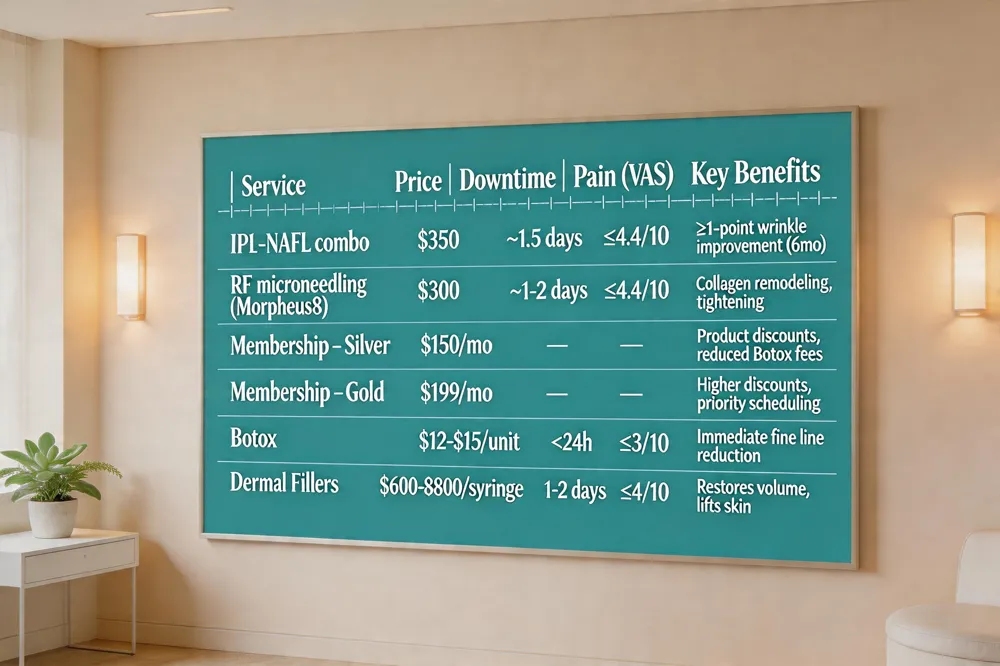 Timeless Med Spa in Berlin, New Jersey brings professional, non‑invasive skin‑rejuvenation close to home. Our clinicians blend proven modalities—intense pulsed light (IPL) for pigment and vascular concerns, non‑ablative fractionated laser (NAFL) for texture and elastosis, and RF microneedling (e.g., Morpheus8)—into Same‑day sequential IPL followed by NAFL that have shown ≥1‑point improvements on the Fitzpatrick Wrinkle and Elastosis Scale in 59 % of patients, with benefits persisting six months (P < 0.001). Social downtime averages only 1.5 days and pain scores stay ≤4.4/10, making the regimen well‑tolerated across Fitzpatrick II–IV skin types.
Sequential skin rejuvenation sessions promote progressive collagen remodeling – Timeless Med Spa offers customized IPL‑NAFL or IPL‑RF series spaced 4–6 weeks apart delivering lasting wrinkle, pigmentation, and texture improvement while minimizing appointments.
Timeless Med Spa reviews – Clients consistently award five‑star ratings, praising Dr. Uche’s expertise, friendly staff, and noticeable tightening and brightening after each session.
Timeless med spa skin treatments cost – Prices vary by modality: IPL‑NAFL combos start at $350 per session, RF microneedling at $300, and membership plans (Silver $150/mo, Gold $199/mo) provide product discounts and reduced Botox fees. Call 404‑400‑6222 for a personalized quote.
Timeless med spa skin treatments review – Patients report smoother texture, tighter skin, and enhanced confidence after completing a series of treatments, highlighting the spa’s modern environment and individualized after‑care guidance.
Our personalized plans begin with a comprehensive skin assessment, ensuring each protocol matches your unique concerns and lifestyle for natural, lasting results.
Acne Solutions at a Modern Med Spa
| Procedure | Primary Effect | % Improvement (clinical) | Downtime | Pain (VAS) |
|---|---|---|---|---|
| IPL (photofacial) | Reduces inflammation, kills P. acnes, shrinks sebaceous glands | 63‑68% pigmentation improvement | ~1.5 days | ≤4.4/10 |
| NAFL (same‑day after IPL) | Stimulates collagen, accelerates turnover, softens scarring | ≥80% texture/brightness/tightness improvement | ~1.5 days | ≤4.4/10 |
| Combined IPL‑NAFL | Synergistic reduction of redness, texture, and scarring | 63‑68% pigmentation + ≥80% texture improvement | ~1.5 days | ≤4.4/10 |
| Professional skincare (SkinMedica® Vitalize, RO®) | Maintains clear pores, balances oil, supports collagen | Adjunct to in‑office treatments | – | – |
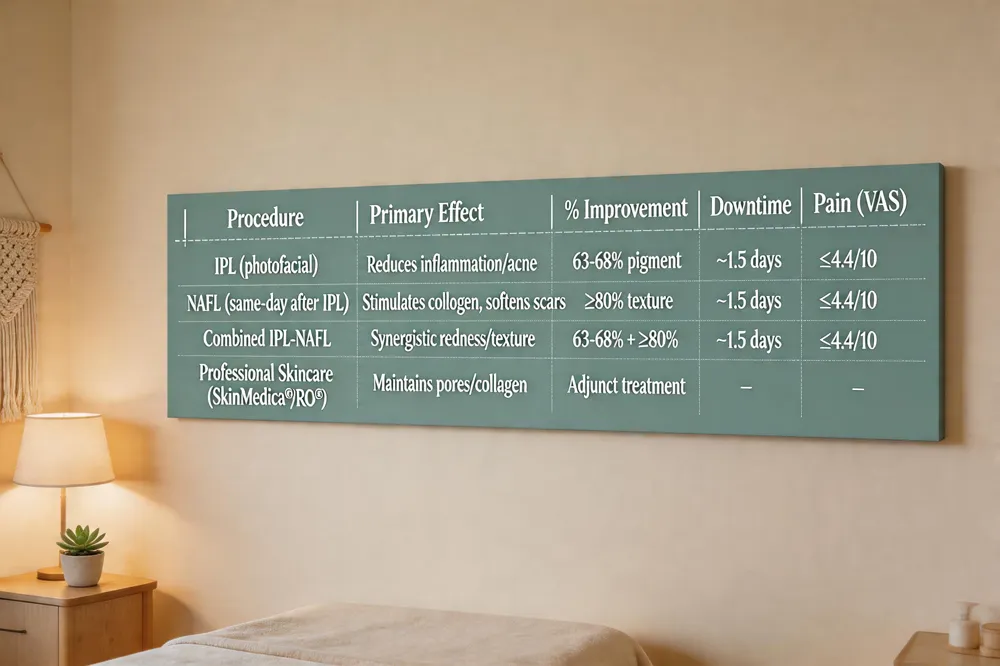 A med spa can be a powerful ally in the fight against acne, offering a suite of advanced procedures that target the root causes of breakouts while promoting skin health. Intense pulsed light (IPL) photofacials, for example, deliver controlled heat to reduce inflammation, kill Propionibacterium acnes, and shrink overactive sebaceous glands, resulting in clearer pores and fewer lesions. When IPL is paired in the follow same needle micro area micro fraction‑pled laser (NAFL) in a same‑day protocol, patients experience synergistic benefits: IPL addresses vascular and pigment components of acne‑related redness, while NAFL creates microscopic thermal zones that stimulate collagen production and accelerate skin turnover, diminishing post‑acne scarring and texture irregularities.
Clinical data from multi‑center studies show that sequential IPL‑NAFL treatments achieved good‑to‑excellent improvement in pigmentation for 63‑68% of patients and enhanced skin texture, brightness, and tightness for over 80% of participants, with minimal downtime (average 1.5 days) and tolerable pain scores (≤4.4/10). These outcomes translate into a smoother, more even complexion that resists future breakouts.
Beyond in, med spas complement procedures with professional‑grade skincare lines such as SkinMedica®Vitalize and andRO® Skin Health. These products deliver targeted retinoids, anti‑inflammatory agents, and hyaluronic acid to keep pores clear, balance oil production, and maintain the collagen‑boosting effects of the in‑office treatments. By tailoring a personalized regimen—combining IPL, NAFL, and high‑performance serums—patients achieve lasting acne control and a radiant, natural‑looking complexion.
Regional Options and What to Look For
| Spa | Services Offered | Phone | Red‑Flag Warning Signs |
|---|---|---|---|
| Tu Beauty Med Spa (Linwood) | Injectables (Botox, fillers, Kybella), biostimulants, IV drips, PRP hair restoration | 609‑517‑1461 | No medical provider, staff can’t explain risks, pushy sales, deep discounts, unclean facilities |
| Luminary Cosmetic Medicine & Hair Restoration | Hair restoration, skin rejuvenation, body contouring, injectables | 609‑373‑6232 | Same as above |
| Q‑Switch laser (available at both) | Pigment/tattoo removal (15‑30 min) | – | Redness, swelling, photosensitivity, pigment change risk if operator inexperienced |
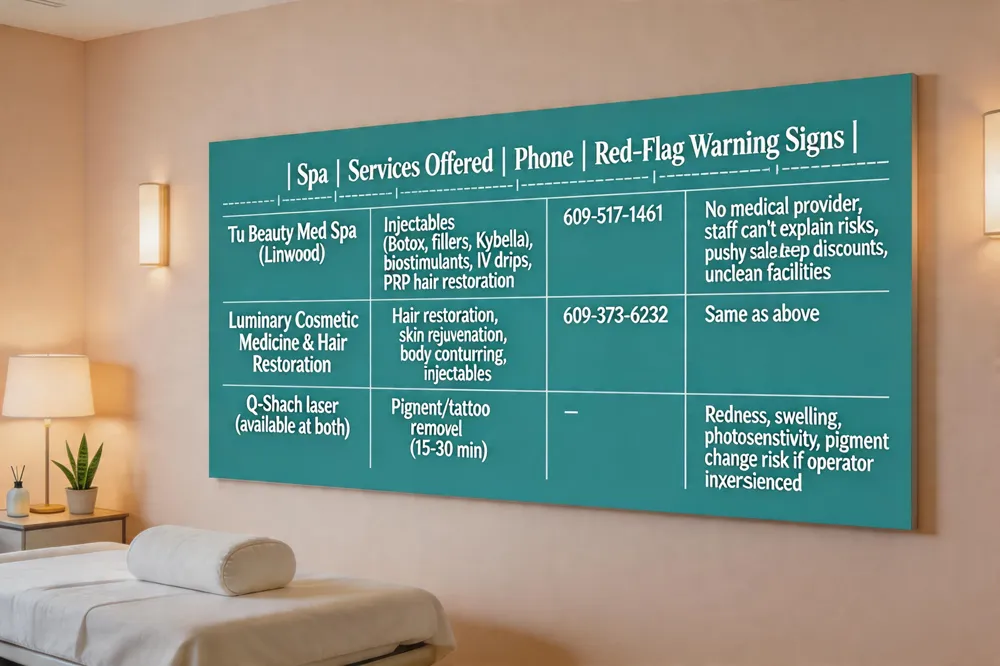 In Linwood, Tu Beauty Med Spa focuses on injectable treatments (Botox, fillers, Kybella), biostimulants, IV vitamin drips, and PRP hair restoration, while Luminary Cosmetic Medicine & Hair Restoration offers advanced hair restoration, skin rejuvenation, body contouring, and injectables. Both practices can be reached by phone (Tu Beauty: 609‑517‑1461; Luminary: 609‑373‑6232) and often accommodate same‑day appointments.
Red‑flag warning signs for any spa include lack of a medical provider, staff who cannot explain risks, pushy sales tactics, overly deep discounts, absent medical history reviews, and unclean facilities or reused tools.
A Q‑Switch laser session lasts 15‑30 minutes, breaking down pigment or tattoo ink with ultra‑short pulses. Visible improvement appears after one treatment, with continued fading over weeks. A series of sessions spaced 4‑6 weeks apart is typical for lasting results. Disadvantages include temporary redness, swelling, photosensitivity, a small risk of pigment changes or scarring—especially with inexperienced operators—and the need for multiple sessions, which can increase cost.
Optimizing Your Treatment Plan
| Age Group | Recommended Treatments | Rationale |
|---|---|---|
| 20‑40 yr | Early prevention: IPL for pigment, NAFL for texture, Botox for dynamic lines | Maintain collagen, prevent deepening of wrinkles |
| 40‑60 yr | Combination protocols: IPL‑NAFL, RF microneedling, fillers for volume loss | Address emerging static lines and loss of elasticity |
| 60 + yr | Ultherapy (non‑invasive lift), laser resurfacing, fillers, modest NAFL | Leverages skin laxity, minimal downtime, improves tone without strict age cutoff |
| All ages | Personalized skin assessment, customized schedule every 4‑6 months | Ensures natural‑looking, long‑lasting results tailored to individual concerns |
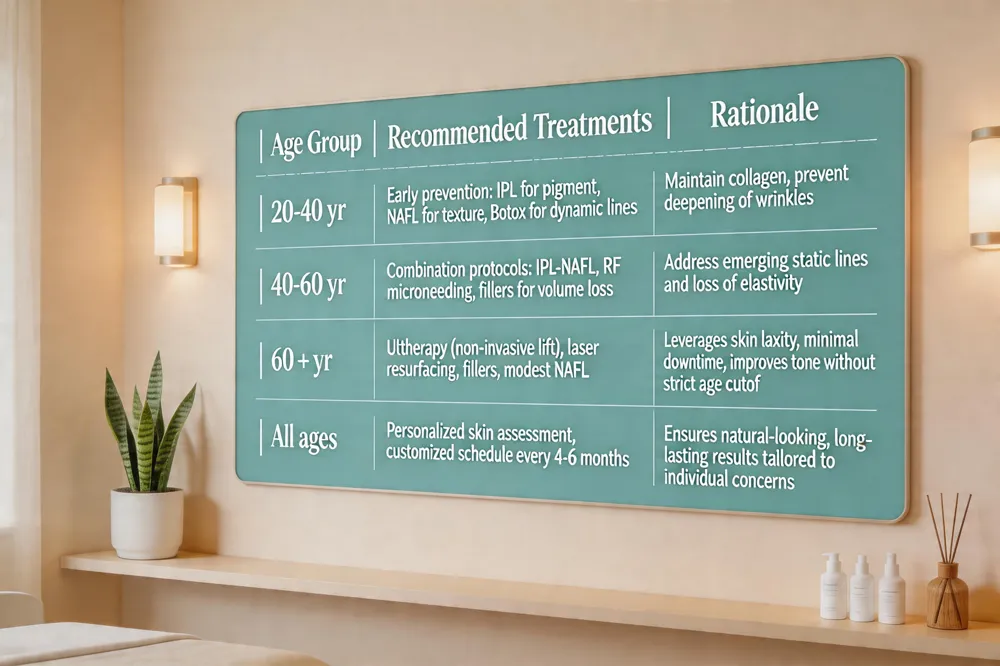 When planning a rejuvenation regimen, age is just one piece of the puzzle. Patients in their 60s can still benefit from technologies such as Ultherapy, which relies on skin quality and laxity rather than a numerical age limit. Good‑quality, collagen‑rich skin—regardless of decade—responds well, and a board‑certified consultation will confirm suitability.
Wrinkle management is most effective when the treatment matches the wrinkle type. Dynamic fine lines (crow’s feet, forehead furrows) respond best to Botox®, while deeper static lines and volume loss are best addressed with dermal fillers. For long‑term texture improvement, microneedling, non‑ablative fractionated lasers (e.g., NAFL, or RF‑based devices stimulate neocollagenesis, delivering gradual smoothing. Chemical peels add a quick resurfacing boost, refining tone and brightness.
Med‑spa services offer solid value when they target a specific concern, prevent future issues, or replace ongoing expenses. Consistent Botox can slow wrinkle formation, reducing the need for more invasive procedures later, and laser‑based treatments provide lasting collagen remodeling with minimal downtime.
Is 60 too old for Ultherapy? No—being 60 years old is not too old for Ultherapy. Success depends on skin health and laxity, not a strict age cutoff.
What is the best med spa treatment for wrinkles? Botox® tops the list for dynamic fine lines; fillers address deeper volume loss, and laser or microneedling protocols improve texture over time.
Are med spa treatments worth the money? Yes—when they address a clear need, prevent future problems, or replace costly routine care, the long‑term benefits often outweigh the upfront cost.
Putting It All Together
A personalized plan is the cornerstone of any successful skin‑rejuvenation journey. After a thorough skin assessment, clinicians can blend modalities such as same‑day IPL followed by non‑ablative fractionated laser, microneedling, or PRP to target the specific signs of aging each patient presents—wrinkles, pigmentation, texture, or loss of firmness. The next step is to schedule a series of treatments spaced 4–6 weeks apart, allowing the skin’s natural collagen remodeling to peak between visits while keeping downtime to a minimum (average social downtime ≈ 1.5 days). Long‑term maintenance involves periodic touch‑up sessions, diligent sun protection, and supportive skincare (e.g., moisturizers, niacinamide, hyaluronic acid) to preserve the collagen gains and prevent new damage. By adhering to a customized, sequenced protocol, patients achieve gradual, natural‑looking results that endure for months, with satisfaction scores consistently above 90 % in clinical studies.