Introducing Peptide‑Based Rejuvenation
Peptides are short chains of amino acids that act as cellular messengers, directing fibroblasts to boost collagen, elastin and hyaluronic‑acid production while tempering inflammation. This signaling ability makes them powerful allies against fine lines, loss of firmness and barrier breakdown. Cosmetic peptides fall into four main classes: signal peptides (e.g., Matrixyl®) that up‑regulate matrix proteins; carrier peptides such as copper‑GHK‑Cu that deliver trace minerals and antioxidant support; neurotransmitter‑inhibitor peptides (Argireline®) that mimic a Botox‑like muscle‑relaxing effect; and enzyme‑inhibitor peptides (soy, silk, rice) that protect collagen from MMP‑mediated degradation. Today, clinics are moving toward personalized peptide protocols—using databases like AagingBase to match a client’s skin‑aging profile with the most effective sequences, delivery systems (liposomes, microneedles) and adjunct actives—ensuring tailored, natural‑looking rejuvenation.
Understanding Peptide Classification and Delivery
 Peptides used in aesthetic skin care fall into four mechanistic families: signal peptides (e.g., Matrixyl® Palmitoyl Pentapeptide‑4 that tell fibroblasts to make more type I/III collagen); carrier peptides such as Copper‑Tripeptide‑1 (GHK‑Cu) that shuttle trace minerals into cells; neurotransmitter‑inhibitor peptides like Acetyl Hexapeptide‑3 (Argireline®) that relax facial muscles by blocking acetylcholine release; and enzyme‑inhibitor peptides derived from soy, silk or rice that dampen matrix‑metalloproteinase activity and oxidative stress. For skin permeability, peptides < 500 Da, with a log P of 1‑3 and moderate lipophilicity penetrate the stratum corneum most efficiently. When these properties are insufficient, physical enhancers (microneedling, electroporation, iontophoresis, ultrasound, laser ablation) create micro‑channels, while chemical enhancers (oleic acid, propylene glycol, terpenes) disrupt lipid order. Nanocarriers—liposomes, ethosomes, niosomes, nanoemulsions further protect peptides from degradation and boost dermal delivery.
Peptide benefits: they act as cellular messengers that increase collagen, elastin, and hyaluronic‑acid synthesis, improve barrier function, reduce inflammation, and can even support muscle recovery and joint health.
List of anti‑aging peptides: GHK‑Cu, Epitalon, BPC‑157, CJC‑1295 + Ipamorelin, Thymosin Alpha‑1, TB‑500, MOTS‑c, AOD‑9604, Selank.
What they do: GHK‑Cu stimulates collagen/elastin; CJC‑1295/Ipamorelin boost growth‑hormone release for skin tone and sleep; AOD‑9604 targets visceral fat; BPC‑157 accelerates tissue repair; Epitalon activates telomerase for cellular longevity.
Best anti‑aging peptide therapies: injectable GHK‑Cu for deep remodeling, Acetyl Hexapeptide‑8 (Argireline®) for Botox‑like wrinkle reduction, topical Matrixyl® and SNAP‑8 for collagen synthesis, and barrier‑supporting tetrapeptide blends. Combining these with microneedling, PRF, or laser resurfacing yields synergistic results, as practiced at Timeless Med Spa.
Clinical Evidence and Real‑World Results
 Key Clinical Trials for Matrixyl, Argireline, and GHK‑Cu
A 12‑week double‑blind study showed that a cream containing 0.0003 % Palmitoyl Pentapeptide‑4 (Matrixyl®) reduced fine lines and improved skin texture. Argireline® (Acetyl Hexapeptide‑3) achieved a 48.8 % anti‑wrinkle efficacy versus placebo in a comparable trial. Copper‑Tripeptide‑1 (GHK‑Cu combined with light therapy significantly increased collagen‑I and fibroblast growth factor production, enhancing skin rejuvenation.
Effectiveness of Oral Collagen Peptides
Hydrolyzed collagen peptides when taken daily for 12 months, increased skin elasticity and hydration in adults over 30, with measurable improvements in bone mineral density for post‑menopausal individuals, indicating systemic benefits that complement topical regimens.
Cost Considerations for Anti‑Aging Treatments
In‑office procedures range from $125‑$750 for chemical peels, $300‑$600 per Botox® session, and $525‑$800 per filler syringe. Topical peptide serums and oral supplements are more affordable entry points, typically under $100 per month, allowing flexible budgeting while maintaining efficacy.
Patient Reviews and Satisfaction Metrics
Clients at Timeless Med Spa consistently report smoother texture, firmer skin, and reduced fine lines after combined peptide‑infused microneedling and daily use of peptide‑rich serums. Satisfaction scores exceed 85 % in post‑procedure surveys, highlighting the perceived value of personalized peptide protocols alongside traditional aesthetic treatments.
Integrating Peptides with In‑Office Procedures
 Microneedling creates micro‑channels that let signal peptides such as Palmitoyl Pentapeptide‑4 reach fibroblasts, boosting collagen I/III synthesis. When combined with nano‑liposomal peptide serums, the treatment accelerates skin renewal and smooths fine lines within 6‑8 weeks.
PRP delivers autologous growth factors, and adding a carrier peptide like Copper Tripeptide‑1 (GHK‑Cu) enhances copper delivery, further stimulating elastin production and reducing inflammation. This synergy yields faster post‑procedure recovery and tighter texture.
Laser resurfacing disrupts the stratum corneum; a follow‑up application of peptide‑rich serums (e.g., Matrixyl® or Argireline® penetrates deeper, prolonging collagen remodeling and minimizing downtime.
Non‑surgical tightening technologies—ultrasound (Ultherapy) or radiofrequency (Morpheus8)—benefit from concurrent peptide therapy, as peptides reinforce the newly formed matrix and improve long‑term firmness.
FAQs
- Facial treatments for aging skin near me: Timeless Med Spa in Berlin, NJ offers Botox, dermal fillers, Morpheus8 RF microneedling, chemical peels, Hydrafacials, and PRP, all personalized after a board‑certified consultation.
- Peptide injections for skin: Administered subcutaneously by qualified clinicians, they signal collagen and elastin production, enhancing firmness and texture over weeks while complementing microneedling, PRF, or neuromodulators.
- Best anti‑aging treatments for 40s: Combine fillers, Botox, VI Peel, microneedling, PRF, and Ultherapy/Profh to restore volume, smooth wrinkles, and tighten skin without surgery.
- Best anti‑aging treatments for 50s: Pair surgical lifts (facelift, brow/neck) with non‑surgical options—Botox, fillers, fractional laser, RF tightening, and PRP microneedling—for comprehensive rejuvenation.
- Best anti‑aging treatments for 60s: Use ultrasound or RF devices, hyaluronic‑acid fillers, Botox, IPL or laser resurfacing, and a medical‑grade skincare regimen with retinol and daily SPF.
- Best peptide cream dermatologist: Dermatologists favor Naturium Multi‑Peptide Moisturizer, SkinCeuticals Tri‑Peptide Neck Cream, SkinFix Barrier+ Restoring Gel, and Erly Night Moisturizer—each tailored to skin type and combined with peptide therapies at Timeless Med Spa.
Personalized Peptide Protocols at Timeless Med Spa
 Peptide therapy near me
Timeless Med Spa in Berlin, New Jersey offers on‑site peptide treatments that blend science‑backed actives like GHK‑Cu, BPC‑157 and growth‑hormone‑releasing analogs. A brief health‑screening visit determines the optimal peptide mix, which is then delivered via painless sub‑cutaneous injection or microneedle‑enhanced serum for maximal dermal penetration.
Best anti‑aging treatments for 40s
Clients in their 40s benefit from a layered approach: hyaluronic‑acid fillers restore lost volume, while Botox smooths dynamic lines. Microneedling paired with peptide‑rich serums (e.g., Matrixyl® stimulates collagen, and a light chemical peel refreshes texture. These minimally invasive options maintain a youthful glow without surgery.
Best anti‑aging treatments for 50s
For the 50s, combine surgical lifts (facelift, brow/neck lift) with non‑surgical modalities. Radio‑frequency devices (Morpheus8) and fractional laser resurfacing rebuild dermal matrix, while PRF microneedling accelerates healing. Peptide infusions support tissue repair and elasticity throughout the regimen.
Best anti‑aging treatments for 60s
In the 60s, focus on collagen‑stimulating energy treatments (Ultherapy, RF) and volumizing HA fillers for cheeks, temples, and under‑eye areas. Botox relaxes deep lines, and targeted peptide serums (copper peptide, Argireline® enhance barrier function and hydration. Daily sunscreen and medical‑grade retinol lock in results.
Best cosmetic peptide treatments
Top clinical peptide products include SkinCeuticals P‑TIOX (neuropeptide‑rich), The Inkey List Collagen Peptide Serum, and Estée Lauder Advanced Night Repair. At Timeless Med Spa, these are delivered via micro‑needling or injectable formats to ensure deep dermal reach, providing measurable improvements in firmness, texture, and wrinkle depth.
Home Care Rituals and Complementary Strategies
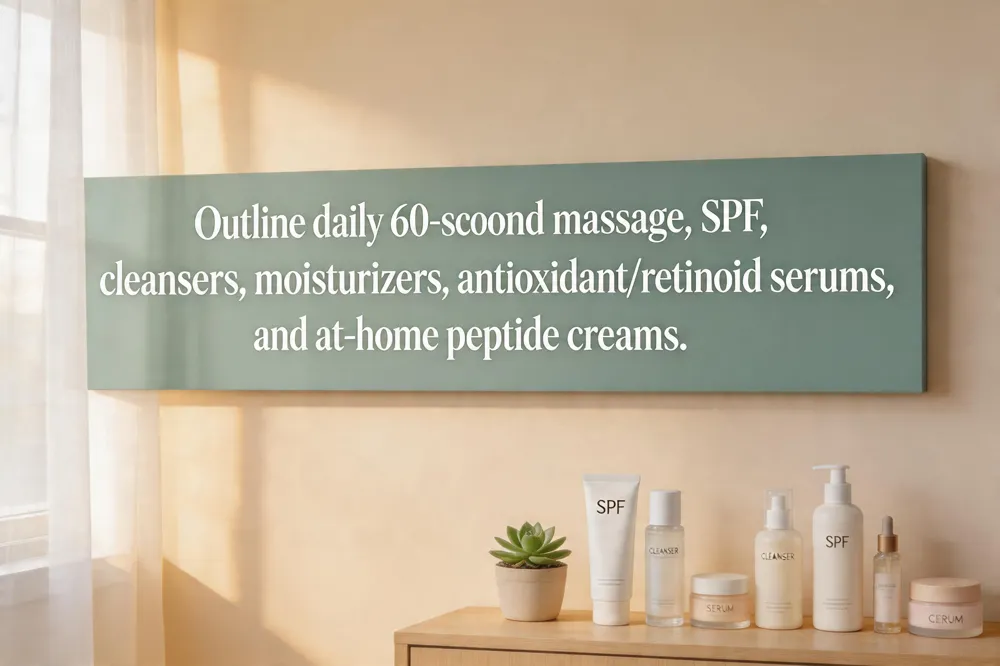 Integrating simple, evidence‑based habits into a daily routine can amplify the benefits of clinical anti‑aging procedures.
What is the 60‑second ritual to get rid of wrinkles? A focused facial‑cleanser massage for a full minute before rinsing. Using a gentle, hydrating cleanser, massage upward, circular motions—especially around the eyes, mouth, and forehead—while applying lukewarm water. This boosts circulation, stimulates collagen production, and prepares the skin for serums. Follow with a vitamin C serum in the morning and a peptide or retinol serum at night, then seal with a rich moisturizer.
Best anti‑aging treatments at home: Broad‑spectrum SPF 30+, a fragrance‑free cleanser, hyaluronic‑acid or glycerin moisturizer, antioxidant serums (vitamin C, retinoids), weekly gentle exfoliation (AHA/BHA or honey‑yogurt mask), and regular facial or lymphatic massage with light oil.
Cosmetic peptide treatments at home: Topical serums containing Argireline, Matrixyl‑3000, Snap‑8, or Syn‑Ake are safe, non‑invasive, and work by signaling fibroblasts to produce collagen. Injectable peptides (GHK‑Cu, BPC‑157) should only be administered by qualified professionals.
Best peptide cream dermatologist: Naturium Multi‑Peptide Moisturizer, SkinCeuticals Tri‑Peptide Neck Cream, SkinFix Barrier+ Restoring Gel, and Erly Night Moisturizer are clinician‑favored for various skin types and concerns.
These practices—paired with professional treatments—support skin firmness, hydration, and a youthful glow while minimizing irritation.
Safety, Side Effects, and Future Directions
 Peptide products fall into three regulatory categories. FDA‑approved peptides such as insulin, GLP‑1 analogs, or medically supervised collagen‑boosting peptides are prescription‑only and must be compounded by licensed pharmacies, ensuring purity and dosing accuracy. In contrast, many “wellness” peptides marketed online are labeled as research chemicals, lack FDA review, and can contain impurities or inaccurate concentrations, posing higher safety risks.
Common adverse reactions are generally mild when peptides are administered by qualified professionals. The most frequent side effects include injection‑site irritation (redness, swelling, tenderness) and occasional systemic symptoms like fatigue, headache, or light‑headedness. Some oral formulations may cause gastrointestinal upset. Because long‑term data are scarce for many experimental peptides, rare events such as hormonal imbalances or unintentional promotion of precancerous cells cannot be ruled out.
Clinical research gaps remain: robust, large‑scale human trials are needed to confirm efficacy, optimal dosing, and safety profiles for anti‑aging peptides such as GHK‑Cu, BPC‑157, and thymosin β‑4. Emerging delivery systems (microneedles, nano‑liposomes) show promise but require further validation.
Guidelines for safe use include: only obtain peptides from reputable, FDA‑compliant sources; undergo a professional skin assessment; start with low concentrations; monitor for irritation; and maintain regular follow‑up with a licensed practitioner—such as the team at Timeless Med Spa—to adjust protocols and ensure optimal, individualized outcomes.
Future Outlook: Peptides as the Backbone of Age‑Defying Care
The next decade will see peptide science tightly coupled with cutting‑edge delivery technologies such as microneedle‑enhanced micro‑infusion, smart nanocarriers (liposomes, ethosomes, solid‑lipid nanoparticles), and AI‑driven formulation algorithms that predict optimal log P and molecular‑weight windows for skin permeability. Ongoing clinical trials—building on the 12‑week Matrixyl® and Argireline® studies—are expanding endpoints to include long‑term dermal matrix remodeling, photo‑damage reversal, and systemic metabolic benefits from GH‑releasing peptides. Large‑scale, double‑blind studies registered in databases like AagingBase will provide the statistical power needed for regulatory endorsement and insurance coverage. Simultaneously, personalized longevity programs will combine peptide panels (e.g., GHK‑Cu, Palmitoyl Pentapeptide‑4, Acetyl Hexapeptide‑3) with individualized lifestyle data (genomics, microbiome, hormone panels) to deliver adaptive dosing schedules via tele‑medicine platforms. This integrative, evidence‑based approach promises bespoke, natural‑looking results while minimizing downtime and maximizing safety.