Why Reiki Belongs in Modern Med Spas
Today's spa-goers are seeking more than a quick lift; they want a holistic wellness experience that supports both inner balance and outer radiance. Recent surveys show a sharp rise in consumer demand for complementary modalities such as Reiki, which is now a staple in many U.S. med spas. Reiki’s gentle, hands‑on energy work can be seamlessly paired with facials, microneedling, or laser resurfacing, amplifying relaxation and reducing post‑procedure stress without any additional equipment. Because the practice is non‑invasive, non‑religious, and free of side effects, it aligns perfectly with the safety standards of aesthetic clinics. At Timeless Med Spa, our philosophy of natural enhancement embraces Reiki as a personalized, energy‑based after‑care tool that helps clients achieve a calm mind, improved sleep, and a luminous complexion—delivering true, whole‑person results.
Scientific Perspective: What the Research Says
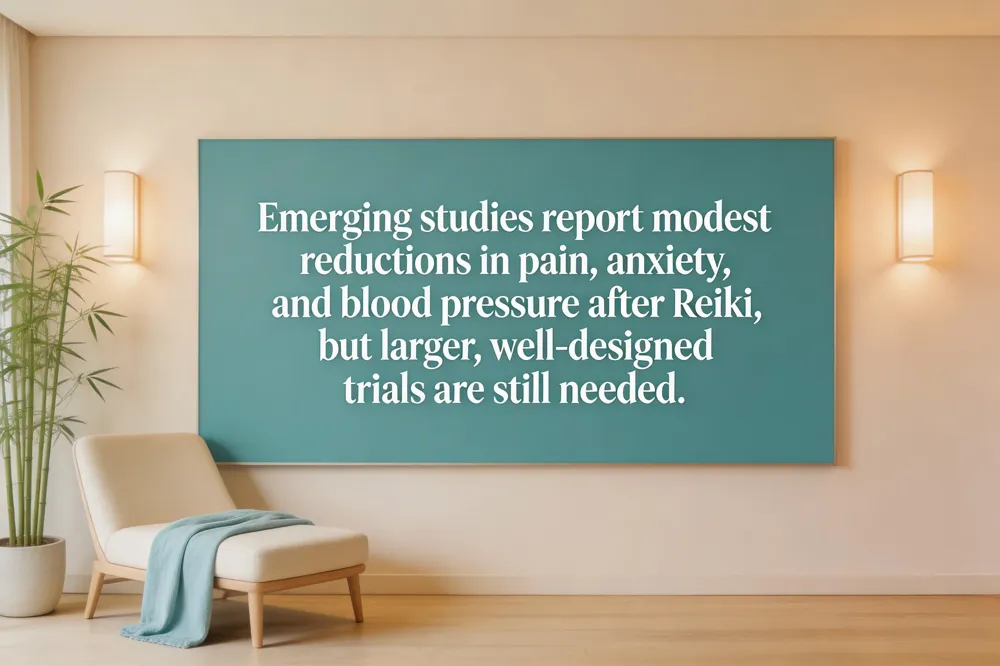 Current research on Reiki is still emerging and largely limited to small, pilot‑scale trials. A few randomized studies have reported modest reductions in pain, anxiety, and blood‑pressure levels, suggesting that the gentle hand‑placement technique can trigger a relaxation response. For example, a double‑blind trial with 66 hypertensive participants found a statistically significant drop in systolic and diastolic readings after a 20‑minute Reiki session (p < 0.0001) compared with placebo and resting controls. Similar trials have noted short‑term relief of neuropathic pain and decreased postoperative anxiety, though many studies lack sufficient sample size or rigorous controls to draw definitive conclusions. These findings guide spa practice by encouraging the use of Reiki as a safe, non‑invasive adjunct that may enhance client comfort and stress‑relief without replacing conventional medical care. However, the evidence base remains thin; larger, well‑designed trials are needed to confirm physiological mechanisms and long‑term benefits. Until then, Reiki should be presented as a complementary wellness option rather than a proven therapeutic cure.
Cost, Certification, and Who Can Deliver Reiki
 In the United States a Reiki session typically costs between $25 and $100, with most practitioners charging $50‑$80 for a 45‑minute treatment. Timeless Med Spa in Berlin, New Jersey reflects a price range of $30‑$80 for the same duration, reflecting local market factors and practitioner experience. Longer sessions (60‑90 minutes) or specialty techniques can approach the higher end of the spectrum, and because insurance does not usually cover Reiki, the expense is out‑of‑pocket for clients.
Certification pathways are well‑established. The International Association of Reiki Professionals (IARP) and the Reiki Alliance offer recognized Level I and Level II programs, after which practitioners may become certified masters. Many U.S. spas require at least Level II certification for staff who will deliver Reiki alongside aesthetic services.
Estheticians can indeed perform Reiki after completing an accredited training program and obtaining the appropriate certification. Because Reiki is a non‑medical, energy‑based therapy, a medical license is not required, but practitioners should verify that their state regulations permit the service and that their liability insurance (e.g., through Elite Beauty Society) extends to Reiki treatments. Proper client consent, documentation, and adherence to scope‑of‑practice rules ensure a safe, ethical offering.
What is the average cost for a Reiki session? The average cost falls between $25 and $100 per appointment, with most 45‑minute sessions priced around $50‑$80. Timeless Med Spa charges $30‑$80 for a 45‑minute session, reflecting local market conditions and practitioner expertise.
Can estheticians perform Reiki? Yes—provided they complete recognized Reiki training, obtain certification (Level I/II), and ensure their professional insurance covers the service. This allows estheticians to integrate Reiki into facials and other wellness treatments while complying with state regulations.
Reiki as a Spa Treatment: Integration with Existing Services
 Reiki is a gentle, hands‑on energy‑healing practice that channels universal life‑force (ki, chi, prana) to promote relaxation, emotional balance and a sense of inner calm. In a spa setting it is offered alongside traditional modalities—facials, massage, acupuncture, and the NADA ear‑acupuncture protocol—without interfering with FDA‑approved aesthetic procedures such as Botox, dermal fillers, or Morpheus8 microneedling.
Is Reiki a spa treatment? Yes. While not a massage technique, Reiki is routinely added to med‑spa menus (e.g., Timeless Med Spa, Ellehomme Holistic Med Spa) as a complementary, non‑invasive service. Practitioners—attuned by a Reiki Master—place their hands lightly on or above the client’s body while the client remains fully clothed, creating a soothing, holistic experience that enhances the benefits of other treatments.
How to combine Reiki and massage? During a massage the therapist can intersperse Reiki hand placements over key energy points or chakras, channeling universal energy while muscles are worked. This synergy deepens relaxation, lowers cortisol, and often leaves clients describing an “inner glow” that complements the outer rejuvenation of the facial or body treatment.
Marketing and differentiation: Position Reiki as a signature wellness add‑on that supports stress‑reduction, better sleep and post‑procedure recovery. Highlight practitioner credentials, offer bundled packages (e.g., facial + Reiki), and use client testimonials that describe the calming, radiant after‑feel. Such positioning attracts wellness‑focused clientele seeking natural, personalized results while boosting average revenue per visit.
From Spa to Hospital: Reiki in Clinical Settings
 Reiki has moved beyond med‑spa treatment rooms and is now a recognized component of integrative‑medicine programs in many U.S. hospitals. Large health systems such as University Hospitals in Cleveland have formal Reiki Volunteer Programs that schedule 20‑minute sessions for chemotherapy outpatients, while TriHealth offers Reiki as part of post‑surgical recovery pathways. These initiatives demonstrate how hospitals adopt Reiki to address stress, anxiety, and pain without interfering with conventional medical care.
Employment models vary. Some hospitals hire Reiki practitioners as staff members, providing a modest salary or hourly wage within multidisciplinary “energy‑healing” teams. Others rely on volunteers or contracted practitioners who work part‑time, often coordinated through the hospital’s alternative‑medicine office. The common thread is a policy‑driven inclusion of Reiki as a complementary therapy, rather than a primary medical treatment.
Case studies illustrate success: University Hospitals reports short‑term symptom relief for cancer patients, and TriHealth notes faster post‑operative recovery and reduced pain in patients receiving Reiki. Looking ahead, growing patient demand for holistic care and supportive research on stress reduction suggest Reiki will continue to integrate into mainstream healthcare, expanding both staff‑based and volunteer‑driven models.
Holistic Wellness Blueprint: Five Pillars of Reiki
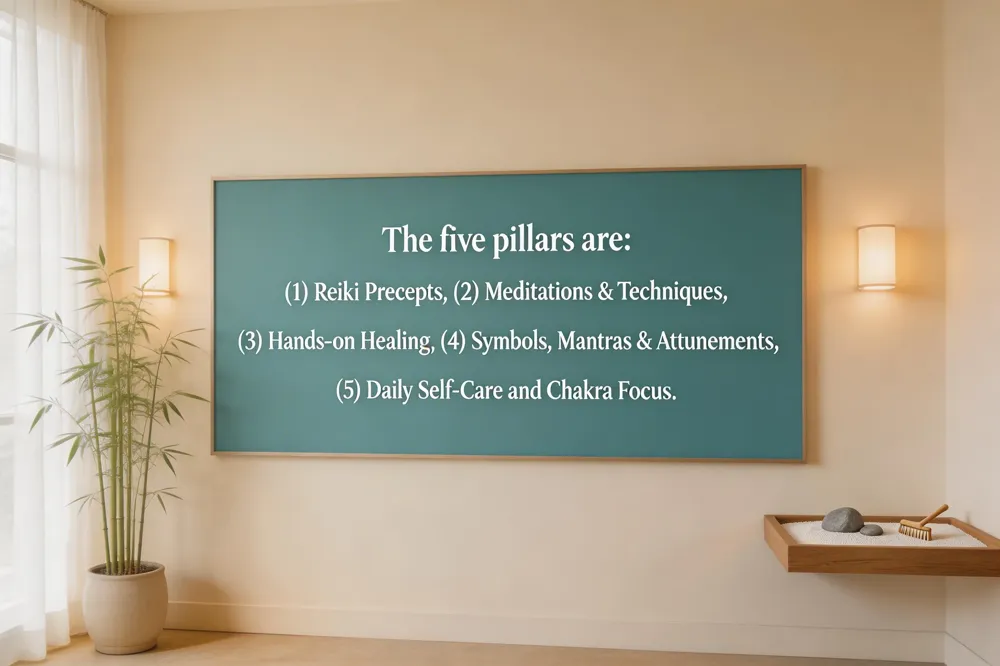 Reiki’s framework rests on five interconnected pillars that support both practitioner growth and client well‑being.
1. Reiki Precepts (Gokai) – These ethical statements—"Just for today, do not anger, do not worry, be grateful, be honest, and serve others"—shape a compassionate mindset and align with the non‑invasive, patient‑first philosophy of U.S. med spas (e.g., Ellehomme Holistic Med Spa, Timeless Med Spa.
2. Reiki Meditations and Techniques (Kokyû Hô) – Structured breathwork cultivates awareness of Ki, preparing the body for the gentle hand‑on work that follows. Practitioners often use these techniques before facials or laser treatments to enhance relaxation, a practice echoed by aesthetic professionals who report calmer, more receptive clients.
3. Hands‑on Healing (Tenohira) – The practitioner’s palms lightly rest on or hover above the client, channeling universal life‑force energy. Sessions last 45–90 minutes and can be offered as a standalone service or an add‑on to existing spa treatments, as documented in numerous U.S. spa protocols.
4. Symbols, Mantras, and Attunements (Shirushi, Jumon, Reiju) – Sacred symbols and chants focus and amplify energy flow, while the Reiju attunement, performed by a Reiki Master, deepens the practitioner’s connection to Ki. This aligns with training standards set by the International Association of Reiki Professionals.
5. Practical Daily Self‑Care and Chakra Focus – Clients are encouraged to perform brief self‑Reiki on key energy centers (chakras) each evening, supporting sleep quality, stress reduction, and skin health—benefits that complement cosmetic procedures and promote graceful aging.
Answer: The five pillars of Reiki are: (1) Reiki Precepts (Gokai), (2) Reiki Meditations and Techniques (Kokyû Hô), (3) Hands‑on Healing (Tenohira), (4) Reiki Symbols and Mantras (Shirushi and Jumon), and (5) Reiju and Attunements.
Bringing Reiki Into Your Beauty Journey at Timeless Med Spa
Reiki’s gentle, hands‑on energy‑healing has been shown in randomized trials to lower pain, anxiety and cortisol while improving postoperative recovery and sleep quality. At Timeless Med Spa in Berlin, New Jersey, certified Reiki practitioners work alongside our board‑certified physicians to weave these benefits into every skin‑care protocol. A typical Reiki‑enhanced facial begins with the usual cleanse, tone and mask, then the practitioner places light hands on or above the client’s body for 45‑60 minutes, promoting deep relaxation, balanced energy flow and enhanced circulation that supports skin renewal. Clients consistently report a calmer mindset, reduced stress‑related breakouts and a noticeable “inner glow” after treatment. We invite you to schedule a personalized session that pairs Reiki with our signature aesthetic services—whether it’s a hyaluronic‑acid filler, Morpheus8 microneedling, or Emsculpt. Our commitment is to keep you the, graceful, and radiant through a holistic, integrative approach that honors both outer beauty and inner well‑being.